Meteorological environment monitoring equipment supplier
Insist on doing high-precision customer favorite technology products

Meteorological environment monitoring equipment supplier
Insist on doing high-precision customer favorite technology products

The price of a negative ion monitoring system is influenced by factors such as the number of monitoring elements, the display screen specifications, and the material of the mounting bracket. Fengtu Technology's FT-FZ1 is priced at 9,000 yuan, and the FT-FZ5 at 88,000 yuan, with different configurations catering to various needs from basic monitoring to research-level applications.
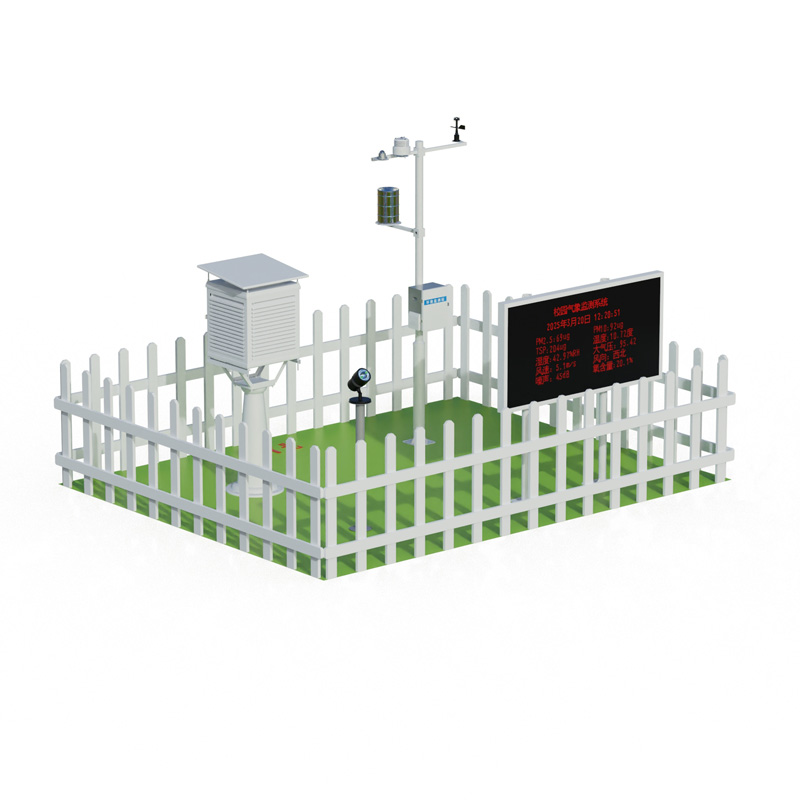
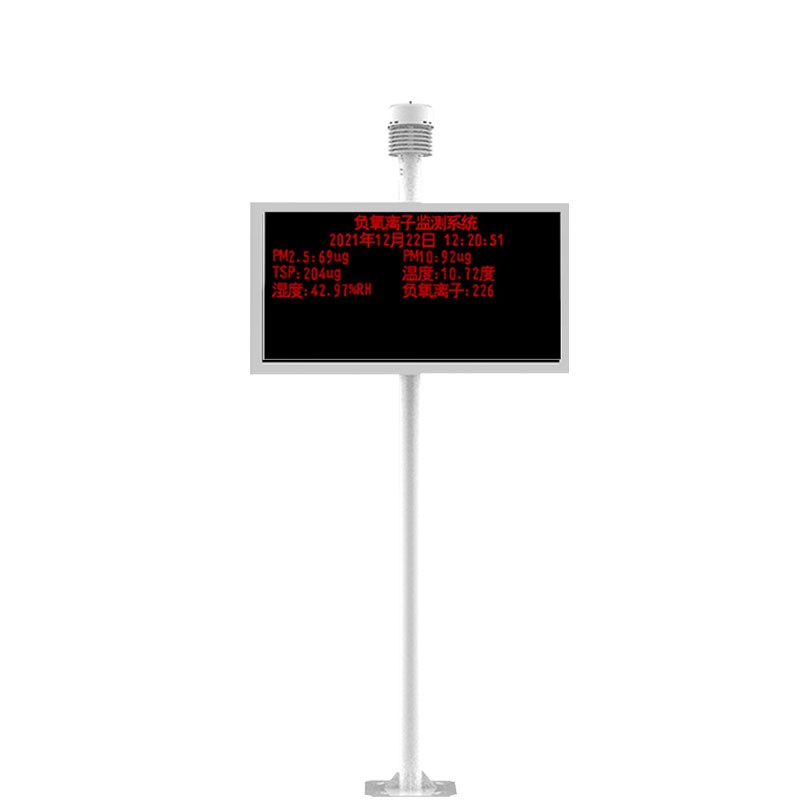
The market price of negative ion monitoring systems exhibits a relatively clear range. Currently, mainstream products on the market can range in price from several thousand yuan to nearly 100,000 yuan for a complete negative ion monitoring system. Fengtu Technology's FT-FZ series covers a price range from 9,000 yuan to 88,000 yuan. The FT-FZ1, priced at 9,000 yuan, features a carbon steel bracket, 5 monitoring elements, and a small screen; the FT-FZ2, priced at 9,800 yuan, also features a carbon steel bracket and 5 monitoring elements, but is equipped with a larger display screen. The FT-FZ3 is priced at 23,800 yuan, with upgraded features including a carbon steel bracket, 10 monitoring parameters, and a large screen display; the FT-FZ4 is priced at 29,800 yuan, featuring a landscape pavilion design, 10 monitoring parameters, and a large screen; the FT-FZ5 is priced at 88,000 yuan, boasting a full-color screen and high-intelligence configuration, monitoring 10 parameters and employing an integrated design.
The price differences mainly stem from several factors. The number of monitoring parameters is one of the core factors influencing price. Basic models typically only monitor negative oxygen ion concentration and a few meteorological parameters, while high-end models can simultaneously monitor more than ten indicators, including temperature, humidity, PM2.5, PM10, atmospheric pressure, oxygen content, noise, wind speed, and wind direction. In terms of hardware configuration, the size and type of the display screen (small screen, large screen, full-color screen), the bracket material (carbon steel, landscape pavilion), and sensor accuracy all directly affect cost. Furthermore, data transmission methods (GPRS/4G/fiber optic), power supply options (mains power or solar power), and cloud platform functionality are also components of the price differences.
In terms of application scenarios, basic negative ion monitoring systems are suitable for small parks, communities, and other locations where high monitoring accuracy is not required, with prices typically ranging from 10,000 to 45,000 yuan. Mid-range systems add monitoring functions for environmental parameters such as temperature, humidity, and air pressure, with prices ranging from 45,000 to 75,000 yuan. High-end professional-grade systems are equipped with high-precision sensors and powerful data processing and analysis capabilities, enabling real-time cloud storage, remote monitoring, and intelligent early warning. These are suitable for research institutions, large-scale environmental protection projects, and other similar scenarios, with prices potentially exceeding 75,000 yuan. When choosing a negative ion monitoring system, users should comprehensively consider their actual monitoring needs, budget, and application scenarios, paying attention to the accuracy and stability of the sensors, data transmission and storage methods, and the supplier's after-sales service capabilities.
Sales Manager:Ms. Emily Wang
Tel, Whatsapp:+86 15898932201
Email:info@fengtutec.com
Add:No. 155 Optoelectronic Industry Accelerator, Gaoxin District, Weifang, Shandong, China