Meteorological environment monitoring equipment supplier
Insist on doing high-precision customer favorite technology products

Meteorological environment monitoring equipment supplier
Insist on doing high-precision customer favorite technology products

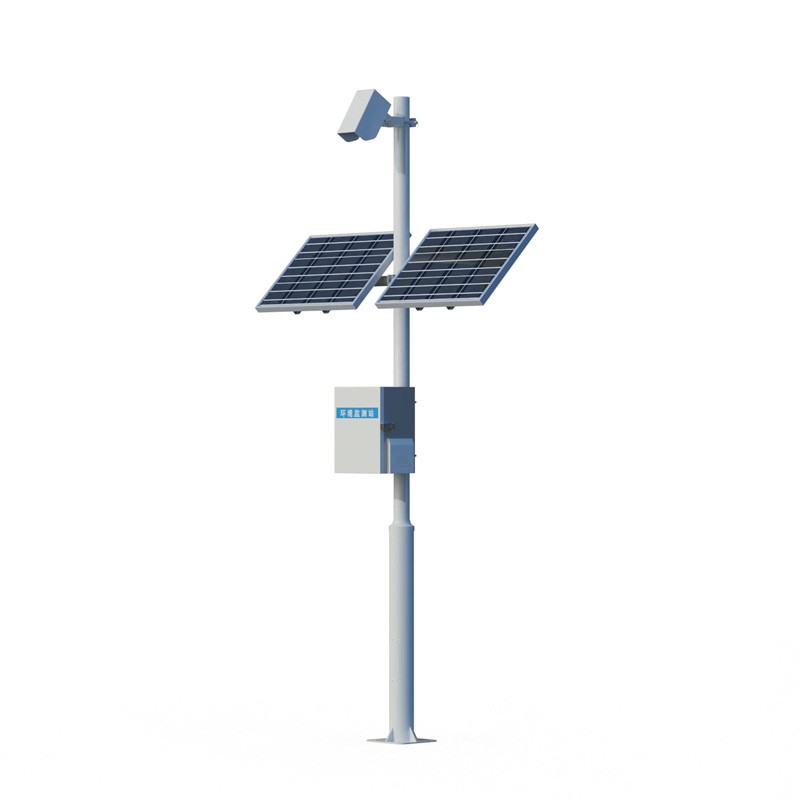
Road Surface Condition detection is an intelligent device that monitors the condition of road surfaces in real time using non-contact laser remote sensing technology. The device has a built-in laser light source that emits monochromatic light of a single wavelength, which is focused by a lens onto the road surface. By receiving the spectral information reflected from the road surface, it accurately analyzes the intensity and wavelength characteristics of the reflected light. Combining infrared remote sensing, laser scattering, and other technologies, the device can quickly identify road surface conditions such as dryness, dampness, wetness, water accumulation, icing, and snow accumulation, and accurately measure key parameters such as water film thickness, ice layer thickness, snow thickness, road surface temperature, and slipperiness. The application of multispectral measurement technology enables the device to accurately detect the thickness of ice, snow, and water accumulation on the road surface.
Compared to traditional embedded road surface sensors, the remote sensing Road Surface Condition detection uses a non-invasive detection method, requiring no damage to the road surface or closure of traffic during installation. The sensor can be installed remotely on a roadside post or mounted on an existing weather station bracket for detection. This feature means that no road closures or road surface cutting are required, making installation both safe and convenient. Remote sensing detectors become the ideal choice for road conditions where embedded road sensors are inconvenient or impossible to install. Subsequent road maintenance and renovations do not require disassembly and reassembly of the equipment, significantly reducing long-term overall costs. Daily maintenance is minimal, requiring only periodic lens wiping.
Road Surface Condition detection can be widely used in various traffic scenarios such as highways, urban roads, airport runways, bridges, and tunnels. The equipment operates 24/7, with an automatic heating device that automatically activates constant-temperature heating when the ambient temperature drops below 5°C, eliminating frost and fogging issues in winter. The body is made of corrosion-resistant material, resisting rainwater corrosion and adapting to complex climatic environments. By providing accurate road condition information, this equipment provides road management departments with precise monitoring data, enabling timely response measures before road safety hazards occur. With the continuous advancement of intelligent transportation construction, non-contact Road Surface Condition detection will serve as the core terminal of the road sensing network, using intelligent monitoring methods to reduce road safety accidents caused by rain, snow, and freezing weather.
Sales Manager:Ms. Emily Wang
Tel, Whatsapp:+86 15898932201
Email:info@fengtutec.com
Add:No. 155 Optoelectronic Industry Accelerator, Gaoxin District, Weifang, Shandong, China