Meteorological environment monitoring equipment supplier
Insist on doing high-precision customer favorite technology products

Meteorological environment monitoring equipment supplier
Insist on doing high-precision customer favorite technology products

The construction of a campus weather station involves four stages: site selection and planning, equipment selection, installation and commissioning, and post-construction maintenance. Site selection must avoid obstructions and heat sources. Equipment includes sensors for temperature, humidity, wind speed and direction, and rainfall. Installation must adhere to observation standards. A joint management mechanism involving faculty and students is essential to ensure continuous operation. (68 words)
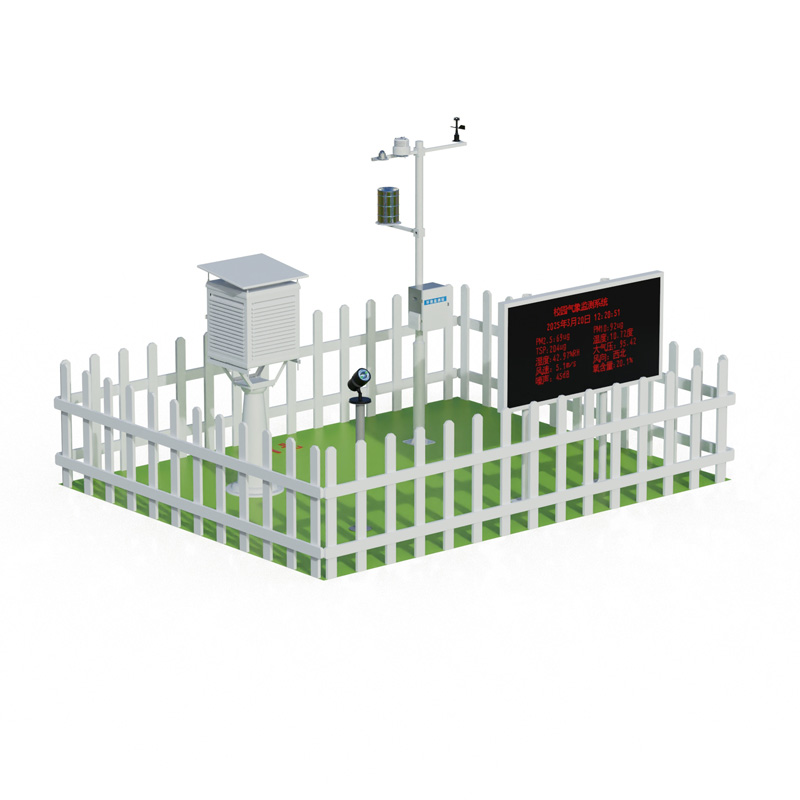
Building a campus weather station is a systematic project involving multiple stages, including site selection and planning, equipment configuration, installation and construction, and post-construction operation and maintenance. Site selection is the first step, directly determining the accuracy and representativeness of the observation data. Ideally, the site should be an open, well-ventilated, and unobstructed area on campus, such as a corner of the playground or the rooftop of a teaching building, avoiding proximity to heat sources, water sources, and tall buildings. The specific site selection must avoid three major sources of interference: heat sources such as air conditioner units in teaching buildings and canteen exhaust vents to prevent inaccurate temperature readings; obstructions such as tall trees and walls to ensure accurate wind direction and speed data; generally, the height-to-distance ratio of obstacles should not exceed 1:8; and densely populated areas such as playground tracks and parking lots to prevent collisions and damage to the equipment from student activities.
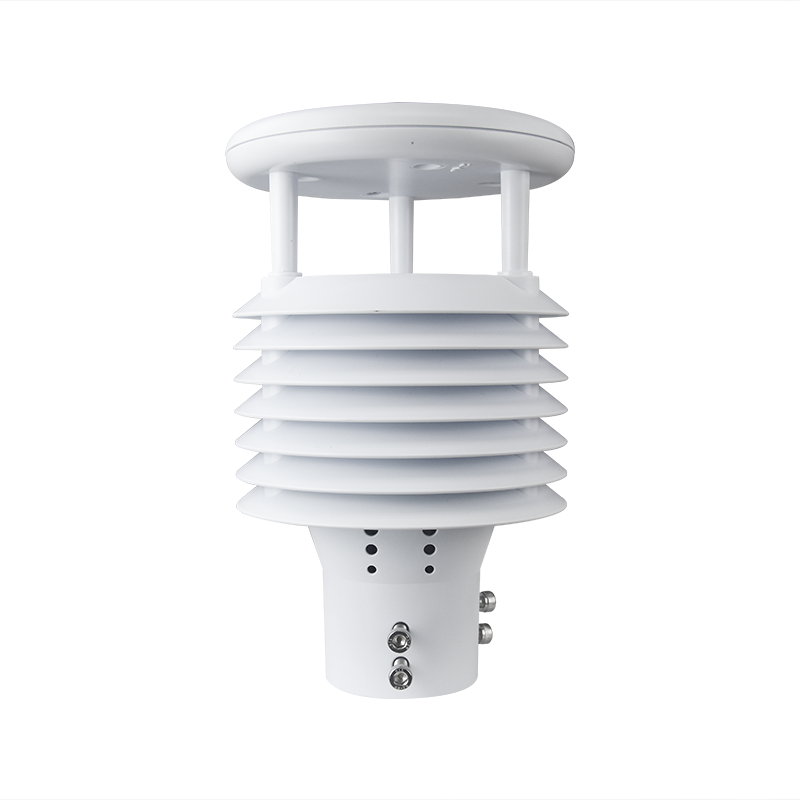
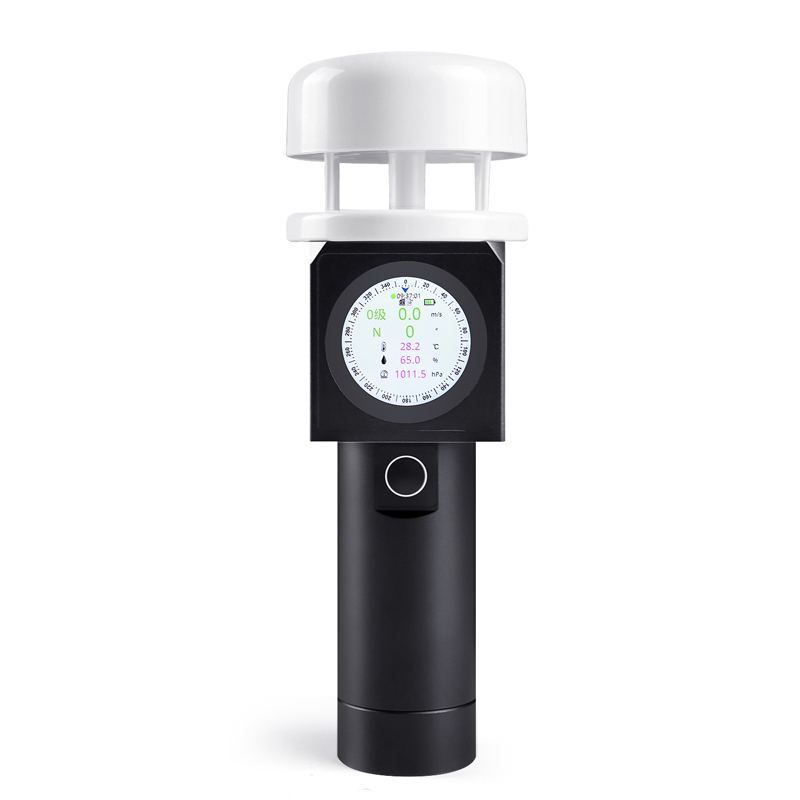
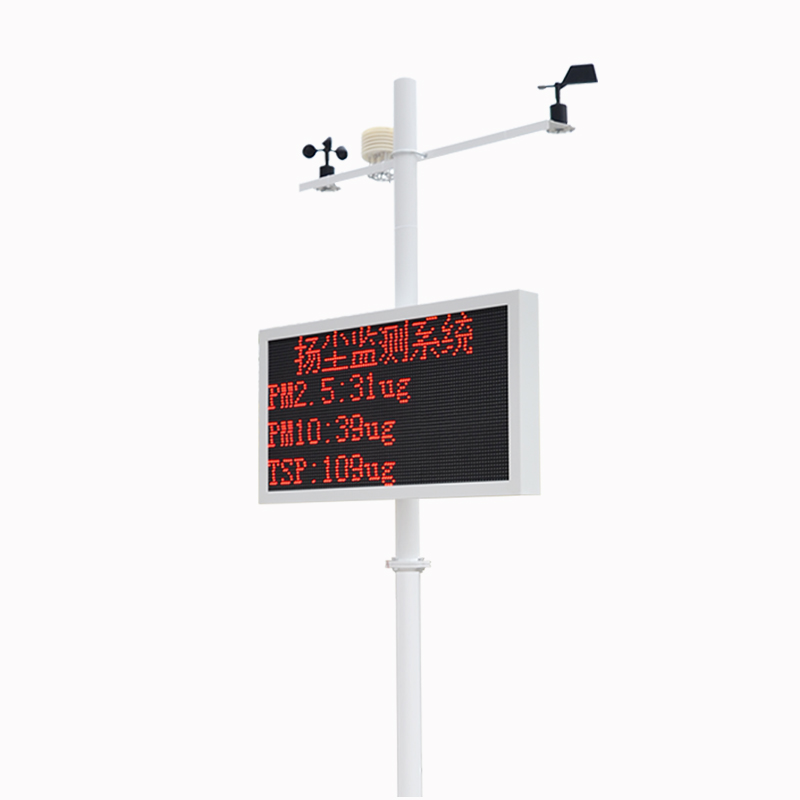
Regarding equipment configuration, the basic configuration should include core sensors for temperature, humidity, wind speed, wind direction, rainfall, and air pressure. Temperature and humidity sensors are typically installed in ventilated louvered boxes to ensure airflow and avoid direct sunlight; the anemometer and wind vane are mounted on the top of the bracket to ensure free rotation; the rain gauge is placed on an open surface free of obstructions. The data acquisition unit is responsible for collecting data from each sensor and performing preliminary processing; the data can be transmitted to a cloud platform via GPRS or a wired network. Mains power can be used, and the equipment casing must be lightning protection and electromagnetic interference resistant.
Installation and construction must follow standardized operating procedures. The observation field should be surrounded by a fence, and the instruments should be arranged according to the principle of "higher in the north and lower in the south," with the Stevenson screen 1 meter above the ground and the rain gauge 70 centimeters above the ground. The support structure must be deeply buried underground and secured with concrete to prevent it from tipping over in strong winds. After installation, the weather station needs to be debugged and calibrated to correct errors in various instruments and sensors, ensuring accurate and reliable data.
Subsequent operation and maintenance are crucial for the weather station's continued effectiveness. A teacher-student co-management mechanism can be established, with science teachers leading student observation groups to record data daily. Equipment maintenance should be carried out regularly: weekly wiping of instrument surfaces to remove dust, monthly checks of support screws for looseness, and timely removal of fallen leaves from the rain gauge during the rainy season. Schools can also integrate the weather station with subject teaching; science classes can analyze temperature and humidity changes, and mathematics classes can use observational data to create charts, making the weather station a true platform for interdisciplinary teaching.
Sales Manager:Ms. Emily Wang
Tel, Whatsapp:+86 15898932201
Email:info@fengtutec.com
Add:No. 155 Optoelectronic Industry Accelerator, Gaoxin District, Weifang, Shandong, China