Meteorological environment monitoring equipment supplier
Insist on doing high-precision customer favorite technology products

Meteorological environment monitoring equipment supplier
Insist on doing high-precision customer favorite technology products

A visibility observer is a specialized device for measuring atmospheric visibility distance, widely used in highways, aviation, maritime, and environmental monitoring. Employing forward scattering optics technology, this device can monitor visibility changes in real time and identify weather phenomena such as fog, rain, and snow, providing data support for traffic control.
A visibility observer is a professional meteorological device used to measure atmospheric visibility distance, playing a crucial role in highway traffic safety management. A monitoring system composed of several networked visibility monitoring stations distributed along the highway can automatically monitor visibility and current weather phenomena along the highway and promptly transmit the monitoring information to the monitoring center for reference by the traffic control system. Under severe weather conditions, the system can promptly issue warning information, informing management personnel and drivers in various ways, thereby improving highway driving safety.
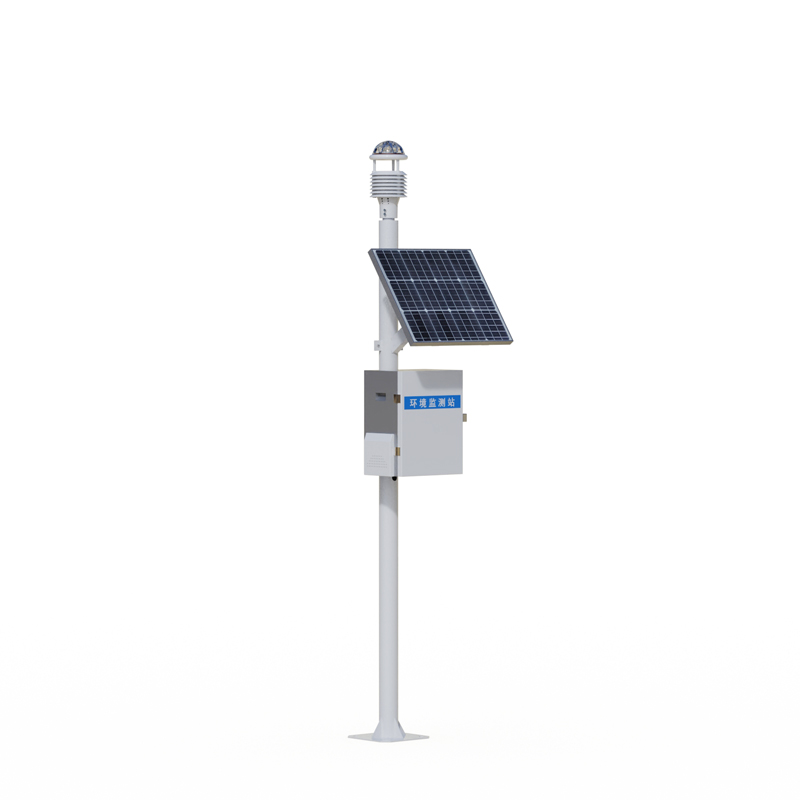
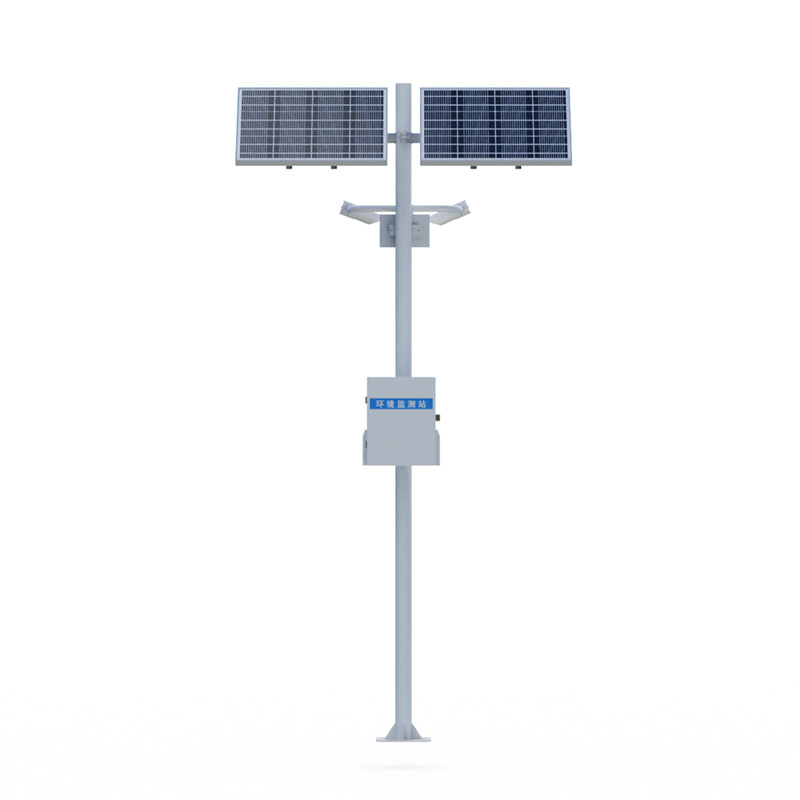
A visibility observer mainly consists of five parts: a visibility sensor, a data logger, a pole support, a power supply system, and a cloud platform. The visibility meter, as the core equipment, consists of a light emitter, a light receiver, and a microprocessor controller. The emitter emits infrared pulsed light, and the receiver detects the intensity of the pulsed light scattered forward by aerosol particles in the atmosphere. All measurement information is collected by the microprocessor controller and converted into meteorological optical range using mathematical model algorithms. The equipment employs forward scattering detection technology, calculating visibility values by measuring the intensity of scattered light at a specific angle and combining this with Mie scattering theory.
In terms of technical parameters, the visibility meter has a range of up to 50 km, a resolution of 1 m, and a measurement error of ±2% within ≤2 km, ±5% within 2 km to 10 km, and ±10% within >10 km. Repeatability is ≤4%, and it can identify weather phenomena including fog, rain, snow, mixed precipitation, and clear skies, with a weather phenomenon recognition rate ≥95%. The equipment operates in a temperature range of -40 to 60℃ and a humidity range of 0 to 100%RH, with a power consumption of only about 1W.
The visibility observation system supports both solar and mains power supply and comes standard with a GPRS wireless transmission module, allowing monitoring data to be uploaded to a cloud platform in real time. The cloud platform supports direct viewing via mobile phones and PC browsers, and features real-time data display, historical data query, data curve analysis, SMS alarms, and threshold settings. Furthermore, users can add integrated weather stations for temperature, humidity, wind, pressure, and rainfall, as well as laser remote sensing road condition detectors, to achieve multi-element meteorological observation. The equipment is simple to install, has low geographical requirements, is unaffected by vibration, and is easy to maintain.
Sales Manager:Ms. Emily Wang
Tel, Whatsapp:+86 15898932201
Email:info@fengtutec.com
Add:No. 155 Optoelectronic Industry Accelerator, Gaoxin District, Weifang, Shandong, China