Meteorological environment monitoring equipment supplier
Insist on doing high-precision customer favorite technology products

Meteorological environment monitoring equipment supplier
Insist on doing high-precision customer favorite technology products

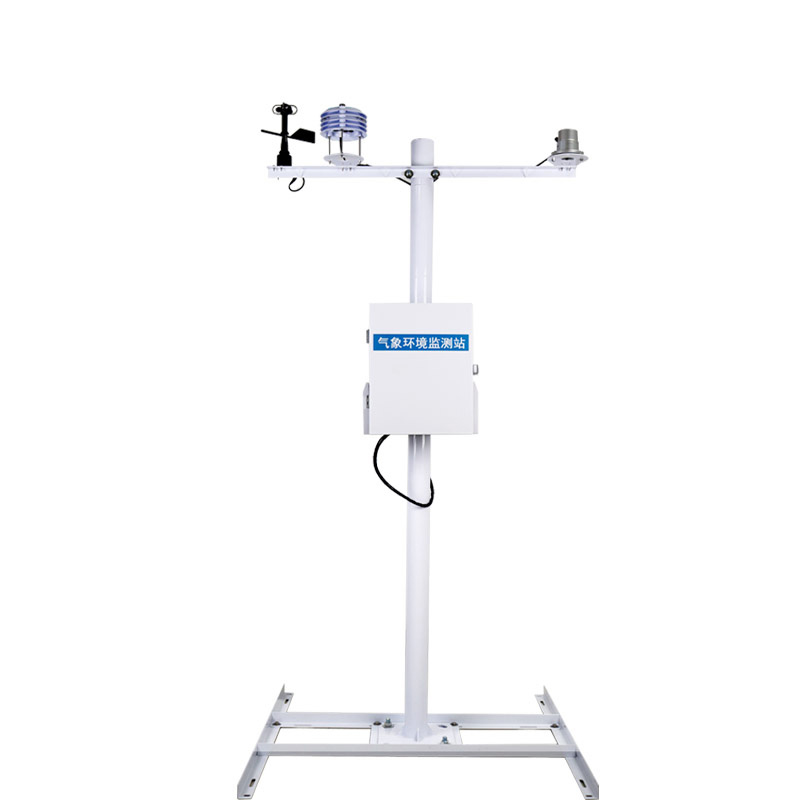
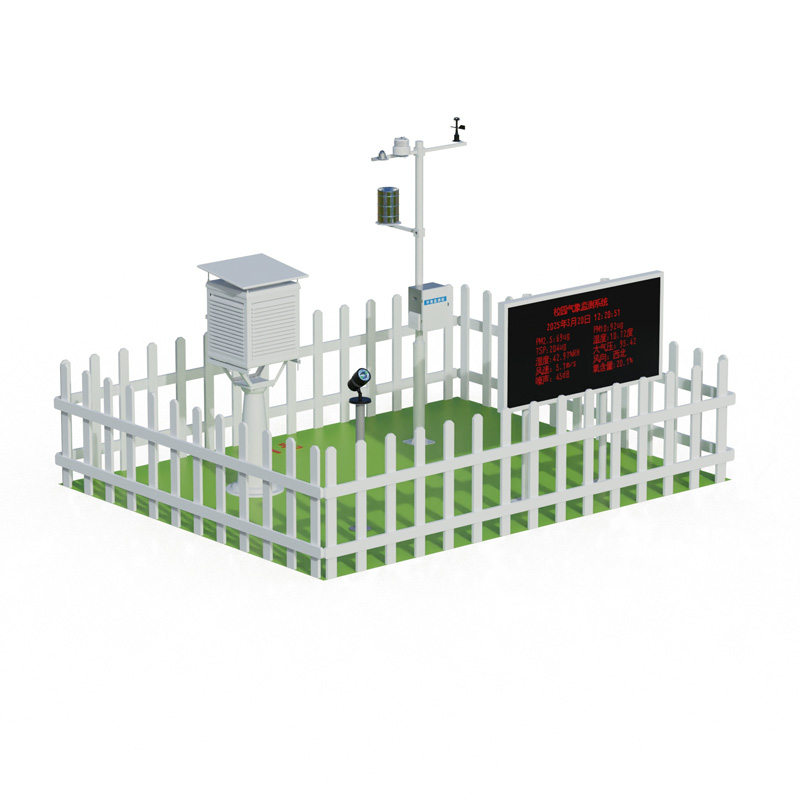
The campus science popularization weather station construction plan adopts a highly integrated design, integrating sensors, data loggers, LED screens, and fiberglass Stevenson screens into a single unit. It supports GPRS wireless transmission and mains power supply, featuring low power consumption and rapid installation, providing a research-grade observation platform for meteorological science education in primary and secondary schools.
The core of the campus science popularization weather station construction plan lies in the precise adaptation of equipment selection to the campus environment. Currently, in the process of promoting quality education in primary and secondary schools, meteorological science popularization has become an important part of science classes and geography experiment teaching. A scientifically sound weather station construction plan must balance observation accuracy and teaching practicality to truly realize the educational value of the equipment.
In terms of hardware configuration, the plan adopts a highly integrated research-grade weather station, integrating core hardware such as sensors, data loggers, fiberglass Stevenson screens (containing dry and wet bulb thermometers), and sunspots, along with pole supports, equipment boxes, and fencing. This integrated design eliminates the need for complex disassembly and installation, significantly reducing the cost of occupying campus space. The equipment features rapid installation and short deployment time per station, effectively avoiding prolonged occupation of campus space and minimizing disruption to normal teaching. The observation field should be built on open, flat ground within the campus, away from roads and tall buildings. A standard-sized meteorological observation field should be a 6m x 8m rectangular structure oriented due north and south.
Regarding power supply and transmission, the solution utilizes mains power to ensure continuous and stable 24-hour operation. Transmission supports GPRS wireless transmission, with wired transmission optional depending on the campus network environment, enabling stable data uploads from open-air playgrounds and areas surrounding teaching buildings. Data display utilizes a 2m x 1m LED screen to display real-time meteorological elements such as temperature, humidity, wind speed, rainfall, and sunlight. With cloud platform functionality, faculty and students can access historical data and real-time curves via terminals to conduct practical experiments such as "temperature changes at different times" and "the relationship between sunshine duration and plant growth."
In terms of operation and maintenance, the equipment's low-power design effectively reduces mains power consumption, minimizing long-term campus operating costs. Fences and protective equipment boxes can effectively prevent human-caused damage and extend the service life of equipment. Various regions have issued relevant construction standards. For example, Jiangxi Province's local standard, "Construction Standard for Campus Science Popularization Weather Stations," clearly specifies requirements for site selection, size, specifications, and instruments; Henan Province's DB41/T 2093—2021 "Construction Standard for Campus Weather Stations" also provides a standardized basis for the construction of campus weather stations. By scientifically planning the installation location and integrating it with the campus landscape layout, weather stations can not only fulfill their teaching functions but also become an important part of campus science popularization culture.
Sales Manager:Ms. Emily Wang
Tel, Whatsapp:+86 15898932201
Email:info@fengtutec.com
Add:No. 155 Optoelectronic Industry Accelerator, Gaoxin District, Weifang, Shandong, China