Meteorological environment monitoring equipment supplier
Insist on doing high-precision customer favorite technology products

Meteorological environment monitoring equipment supplier
Insist on doing high-precision customer favorite technology products

A raindrop spectrometer is a meteorological sensor that automatically and continuously monitors precipitation particles. It measures the falling velocity and size of precipitation particles using infrared light bands to identify weather phenomena such as drizzle, rain, snow, and hail.
A raindrop spectrometer is a meteorological sensor used for automatically and continuously monitoring the spectrum of precipitation particles and precipitation weather phenomena. It uses laser attenuation or infrared light band measurement as its core technology, replacing traditional manual observation methods and low-precision, labor-intensive measurement methods such as the filter paper color spot method and the dough method. The device actively emits infrared light bands and measures the changes in light energy received by precipitation particles as they pass through the bands. This allows it to calculate the spectral distribution of the falling velocity and particle size of the precipitation particles, and automatically identifies the precipitation weather phenomenon based on an empirical model. This measurement method can cover both liquid and solid precipitation forms. In terms of particle size measurement, the range is 0.2 to 5 mm for liquid precipitation and 0.2 to 25 mm for solid precipitation. The falling velocity measurement range is 0.2 to 20 meters per second. The raindrop spectrometer incorporates 32 particle size levels and 32 velocity levels, enabling precise characterization of the distribution characteristics of precipitation particles of different sizes and velocities during precipitation. In terms of measurement accuracy, the measurement error for liquid precipitation is controlled within ±5%, and for solid precipitation, it is ±20%. The measurement range for precipitation intensity is 0 to 999 mm/h, and the automatic identification rate of precipitation type exceeds 90%.
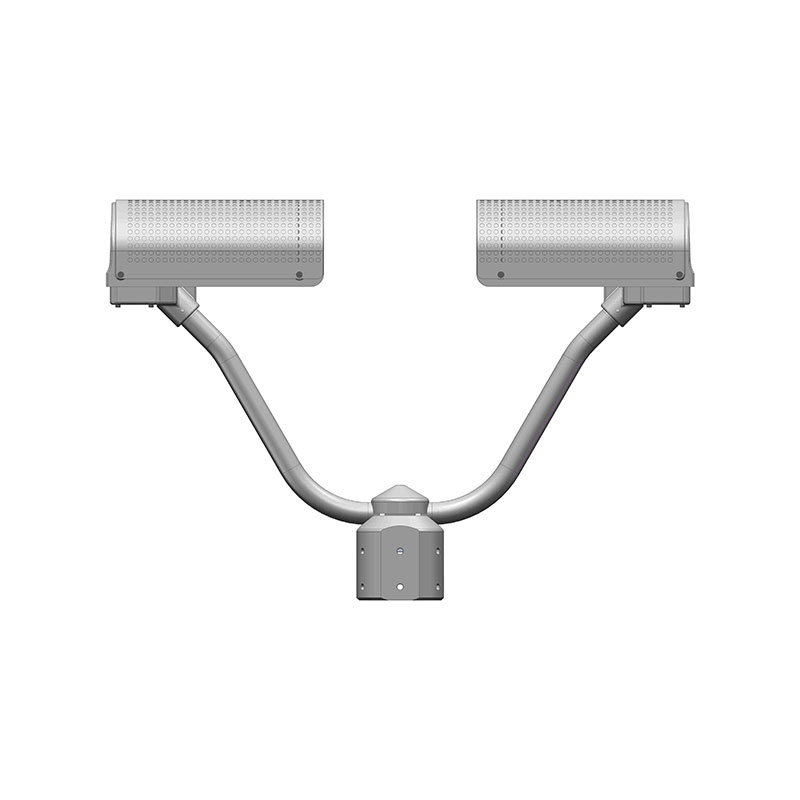
The raindrop spectrometer has physical dimensions of 660 mm (length), 450 mm (width), and 120 mm (height), weighing no more than 7 kg. It has an IP65 protection rating, operates in temperatures ranging from -40°C to +50°C, and can operate stably in all weather conditions. The device features a low-power design, consuming no more than 4 watts in non-heated mode, and increasing to 80 watts when the heating module is activated. Communication interfaces support RS232 and RS485, allowing direct connection to automatic weather stations or data acquisition systems. Thanks to its heating control module, the instrument can operate normally in temperatures as low as -40 degrees Celsius, preventing measurement failures caused by sensor icing during snowfall. The raindrop spectrometer outputs weather codes according to WMO standards, defaulting to the 4680 code table, but can switch to 4677 or NWS code tables. The default data output interval is 60 seconds, adjustable from 10 seconds to 60 minutes.
In terms of applications, the raindrop spectrometer is widely deployed in meteorological stations, hydrogeographic research, airport weather analysis, and agricultural ecological monitoring. In airport aviation meteorological support, the raindrop spectrometer can replace traditional tipping bucket rain gauges, solving the problem of underestimating precipitation due to delayed tipping during heavy rainfall, and addressing the deficiency of measured values being far less than actual precipitation during winter snowfall. By measuring precipitation type and intensity in real time, the device provides air traffic control, airports, and airlines with precipitation data accurate to the minute, assisting in takeoff and landing decisions. In the field of hydrology, raindrop spectrometer data can be used for parameter calibration of flood forecasting models and runoff simulation, providing measured data support for disaster early warning. Furthermore, raindrop spectrometers are also used for meteorological radar calibration, correcting radar reflectivity measurement biases and improving radar telemetry accuracy by providing ground-based raindrop size distribution data. From working principles to technical specifications, from installation and deployment to practical applications, raindrop spectrometers offer a complete technical solution for precipitation monitoring and have gradually become an indispensable basic device in meteorological observation, hydrological early warning, and traffic control.
Sales Manager:Ms. Emily Wang
Tel, Whatsapp:+86 15898932201
Email:info@fengtutec.com
Add:No. 155 Optoelectronic Industry Accelerator, Gaoxin District, Weifang, Shandong, China