Meteorological environment monitoring equipment supplier
Insist on doing high-precision customer favorite technology products

Meteorological environment monitoring equipment supplier
Insist on doing high-precision customer favorite technology products

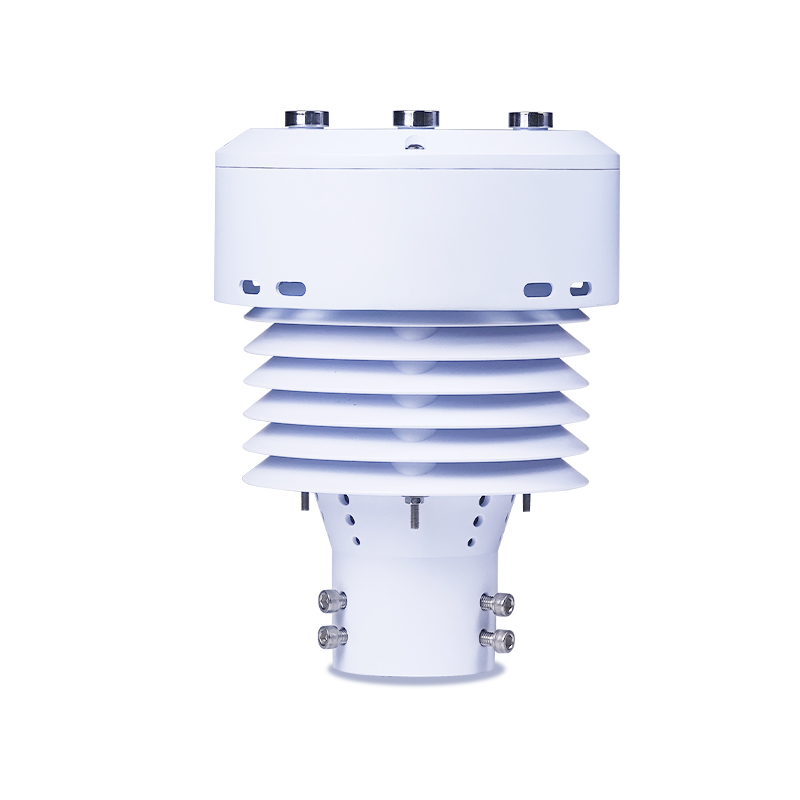
Highly integrated negative oxygen ion sensors combine the monitoring of ion concentration with temperature, humidity, PM2.5, and PM10 levels into a single unit. Utilizing a cylindrical electrode aspiration structure, the device achieves a measurement range of 0 to 100,000 ions/cm³ with a resolution of 1 ion/cm³, enabling it to accurately capture dynamic changes in airborne negative oxygen ion concentrations within a very short timeframe.
In traditional environmental monitoring, metrics such as negative oxygen ion concentration, temperature, humidity, PM2.5, and PM10 often require measurement via multiple independent devices. This approach not only complicates installation and consumes significant physical space but also makes it difficult to ensure the synchronization of data acquisition. However, with the advancement of integrated sensor technology and the continuous increase in integration density, this challenge is gradually being resolved. Highly integrated negative oxygen ion sensors consolidate the aforementioned environmental parameters within a single physical structure, marking a technological leap from the monitoring of isolated metrics to comprehensive air quality assessment.
The core of a negative oxygen ion sensor lies in its ion detection component. Taking the cylindrical electrode aspiration structure as an example: the sensor employs a fan to draw air in uniformly; under the influence of an electric field, negative oxygen ions present in the air are captured by the electrodes and converted into electrical signals, which are then processed to calculate the concentration value. This measurement principle not only ensures high stability but also enables the sensor to respond rapidly to fluctuations in environmental negative oxygen ion concentrations. Typical technical specifications include a measurement range of 0 to 100,000 ions/cm³, a measurement accuracy of ±10% of the reading, and a resolution of 1 ion/cm³—capabilities that satisfy the monitoring requirements of diverse environments, ranging from urban parks to forest scenic areas.
Furthermore, the device integrates internal sensors for temperature and humidity, as well as detection modules for PM2.5 and PM10. The temperature measurement range spans from -40°C to 85°C, humidity coverage extends from 0% to 100% RH, and particulate matter concentration monitoring supports a range of 0 to 1,000 µg/m³. All sensor modules share a common power supply and communication interface, allowing for the simultaneous output of all parameters via an RS485 bus, thereby effectively reducing the complexity of system integration. Users are thus able to acquire a comprehensive dataset encompassing both negative oxygen ion levels and multiple air quality parameters without the need to configure a separate data acquisition unit.
From an application perspective, the advantages conferred by this highly integrated design can be primarily summarized in three key points. First, the device's physical footprint has been significantly reduced, resulting in lower installation and maintenance costs. Second, the simultaneous acquisition of multiple parameters eliminates time lags, thereby enhancing the accuracy of air quality assessments. Third, the absence of moving parts minimizes mechanical wear, boosting the device's reliability during prolonged outdoor operation. This type of sensor facilitates efficient data acquisition across various applications, including air quality monitoring in scenic areas, environmental assessment for eco-wellness settings, and the analysis of ecological benefits within urban planning.
Sales Manager:Ms. Emily Wang
Tel, Whatsapp:+86 15898932201
Email:info@fengtutec.com
Add:No. 155 Optoelectronic Industry Accelerator, Gaoxin District, Weifang, Shandong, China