Meteorological environment monitoring equipment supplier
Insist on doing high-precision customer favorite technology products

Meteorological environment monitoring equipment supplier
Insist on doing high-precision customer favorite technology products

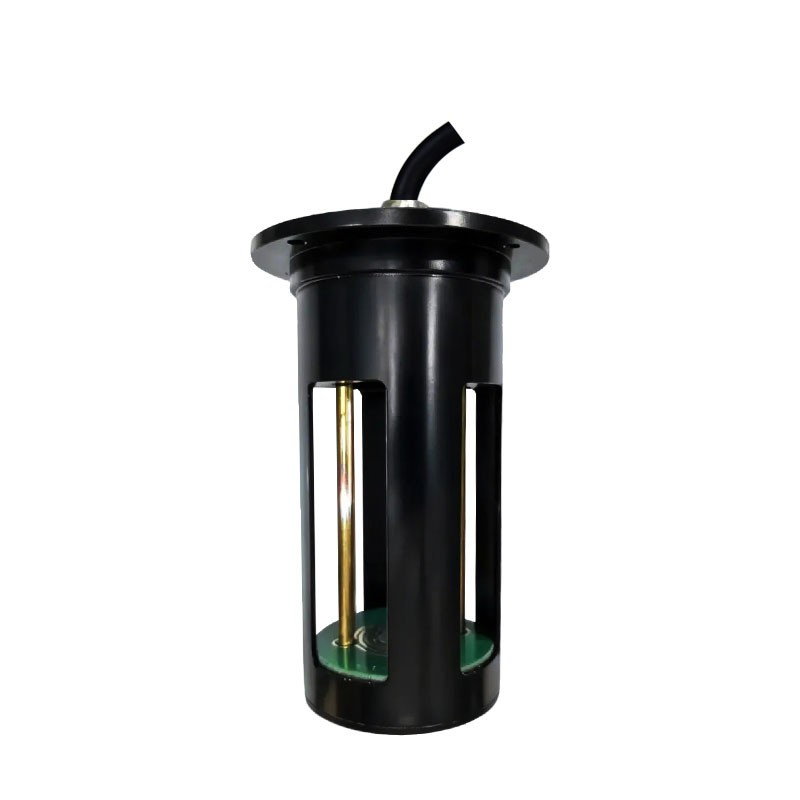
Ice Monitoring Equipment integrates microwave detection and temperature analysis technologies to monitor the icing status of outdoor equipment—such as wind turbine blades, nacelles, and cables—in real time. It accurately measures ice thickness, assesses associated risks, and triggers de-icing systems, ensuring the stable and efficient operation of power equipment in harsh, low-temperature environments.
Ice Monitoring Equipment is a high-precision monitoring device designed for wind power and outdoor electrical equipment. Relying on mature microwave detection technology combined with temperature data analysis, it enables all-weather, real-time monitoring of ice accumulation across various types of power equipment, effectively mitigating operational hazards caused by icing during cold, snowy weather. The device comprehensively covers icing monitoring scenarios for outdoor facilities—including wind turbine nacelles, blades, cables, cooling towers, and communication antennas—making it suitable for the vast majority of outdoor power operation and maintenance applications.
Ice Monitoring Equipment utilizes the differences in microwave feedback signals among ice, water, and air to accurately identify icing conditions in the monitored area. By analyzing signal strength and ice distribution, it precisely calculates ice thickness; it offers a detection accuracy of 0.2 mm and a maximum detection range of 50 mm. The alarm threshold for ice thickness is flexibly adjustable within this range to meet the specific protection standards of different equipment. Supporting RS485 and MODBUS-RTU communication protocols for stable and efficient data transmission, the device uploads monitoring data and issues icing alerts in real time. It also automatically assesses the severity of the icing hazard, issues de-icing control commands, and coordinates with de-icing systems to execute de-icing operations.
To address the specific monitoring needs of wind turbine blades, Ice Monitoring Equipment features a miniaturized, embedded design. It can be installed in a distributed manner on areas prone to icing, such as blade edges, to capture accurate icing data and overcome the significant data discrepancies often associated with traditional non-contact monitoring methods. Additionally, the device is equipped with lightning protection and a self-heating function; this enables it to withstand outdoor lightning strikes while preventing missed detections or false alarms caused by ice accumulation on the sensor surface. To address the challenge of retrofitting sensors into existing wind turbines, an external nacelle monitoring sensor enables equivalent monitoring by tracking icing conditions on the nacelle and inferring blade icing based on ambient temperature and humidity data.
Ice Monitoring Equipment supports scenario-specific customization; installation methods and device configurations can be adapted to the structural characteristics of various assets—such as cables, antennas, and cooling towers—to maximize the authenticity of monitoring data. The device offers exceptional operational adaptability, functioning reliably in temperatures ranging from -40°C to 85°C. With a power consumption of just 0.4W in non-heating mode, it effectively reduces energy costs associated with operation and maintenance, while comprehensively enhancing the operational stability and power generation efficiency of electrical equipment during adverse weather conditions.
Sales Manager:Ms. Emily Wang
Tel, Whatsapp:+86 15898932201
Email:info@fengtutec.com
Add:No. 155 Optoelectronic Industry Accelerator, Gaoxin District, Weifang, Shandong, China