Meteorological environment monitoring equipment supplier
Insist on doing high-precision customer favorite technology products

Meteorological environment monitoring equipment supplier
Insist on doing high-precision customer favorite technology products

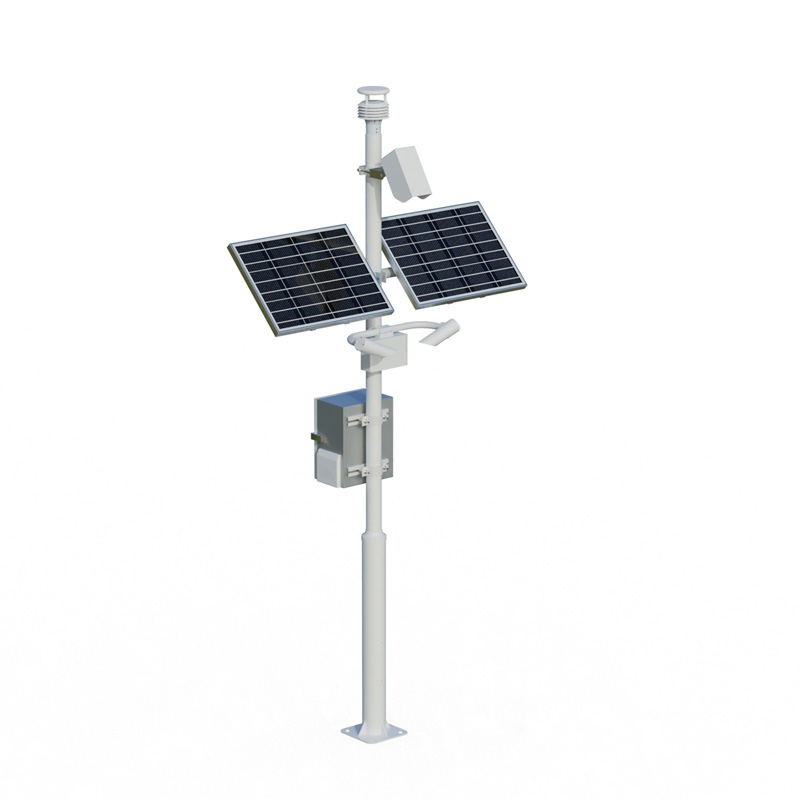
Road sensor continuously acquires real-time meteorological data such as visibility, wind speed, wind direction, temperature, humidity, atmospheric pressure, rainfall, and road conditions. This data is then remotely transmitted and aggregated to transportation departments, providing timely information support for roadside meteorological services and public travel.
Highway driving safety is significantly affected by weather conditions. Fog reduces visibility, rain and snow make roads slippery, and strong winds affect vehicle stability; all these meteorological factors can potentially cause traffic accidents. Deploying meteorological monitoring stations along roads and sending real-time monitoring data to relevant management departments can assist them in issuing timely warnings and making advance arrangements for weather phenomena affecting road safety, such as fog, precipitation, strong winds, and icy roads.
Road sensor is a comprehensive monitoring system specifically designed for highway safety. The equipment integrates multiple high-precision sensors, enabling all-weather real-time monitoring of meteorological elements such as visibility, wind speed, wind direction, temperature, humidity, atmospheric pressure, rainfall, and road conditions. The system aggregates various data through remote transmission and promptly delivers them to transportation departments, providing them with firsthand information for ensuring meteorological support along the transportation routes. Monitoring data should be transmitted in real-time to road section, regional, or provincial information centers via highway fiber optic communication networks or public wireless communication.
Regarding technical standards, several provinces have issued relevant construction specifications. Hubei Province has released DB42/T 2260—2024, "Construction Specifications for Automatic Weather Stations on Highways"; Zhejiang Province has released DB33/T 2342—2021, "Technical Specifications for the Construction of Highway Traffic Meteorological Observation Stations"; Yunnan Province has released DB53/T 1090—2022, "Technical Specifications for the Construction of Highway Traffic Meteorological Station Networks"; and Henan Province has released DB41/T 2965-2025, "Specifications for the Deployment of Highway Traffic Meteorological Observation Stations." These standards clearly stipulate the requirements for station site selection, deployment, instrument installation, data transmission, and operation and maintenance.
Regarding equipment performance, the data transmission frequency of highway traffic meteorological stations should be no less than once per minute, the data transmission timeliness rate should be no less than 98%, and the data integrity and accuracy rates should both be no less than 98%. The continuous uninterrupted operation time of the equipment should be no less than 5500 hours. There are also specific requirements for sensor deployment: the center point of the visibility sensor should be 3.0 meters above the road surface, and the installation height of temperature and relative humidity sensors should be 3.0 to 3.5 meters.
Road sensor is widely used for monitoring meteorological environmental conditions in scenarios such as highways, bridges, tunnels, and airport runways, providing meteorological data support for the safe operation of different traffic scenarios. Through high-precision, all-weather continuous monitoring, this equipment can effectively assist traffic management departments in timely grasping the meteorological conditions along the route, playing an important role in ensuring road traffic safety and public travel convenience.
Sales Manager:Ms. Emily Wang
Tel, Whatsapp:+86 15898932201
Email:info@fengtutec.com
Add:No. 155 Optoelectronic Industry Accelerator, Gaoxin District, Weifang, Shandong, China