Meteorological environment monitoring equipment supplier
Insist on doing high-precision customer favorite technology products

Meteorological environment monitoring equipment supplier
Insist on doing high-precision customer favorite technology products

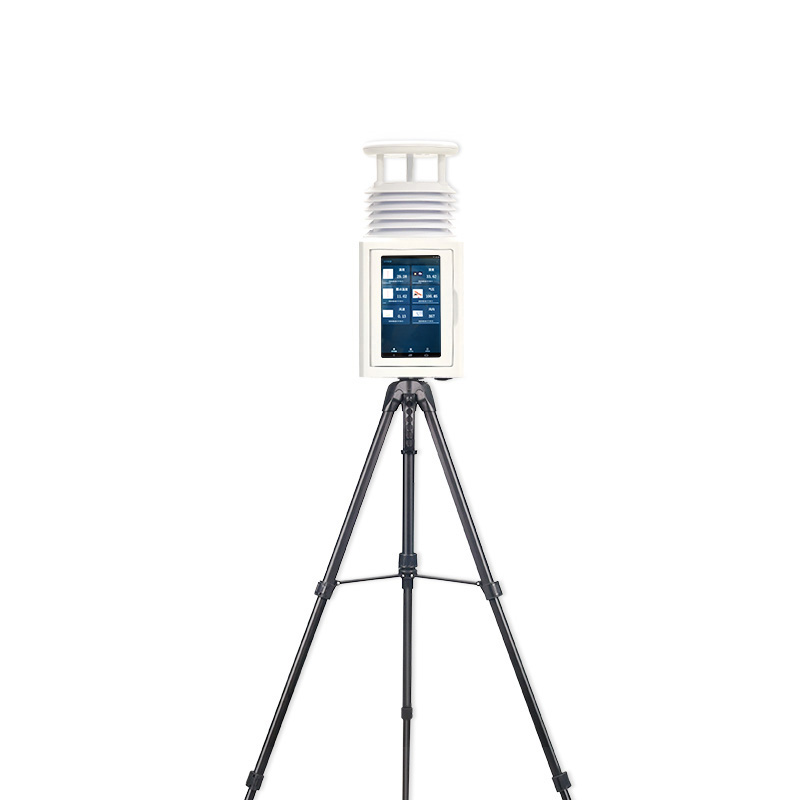
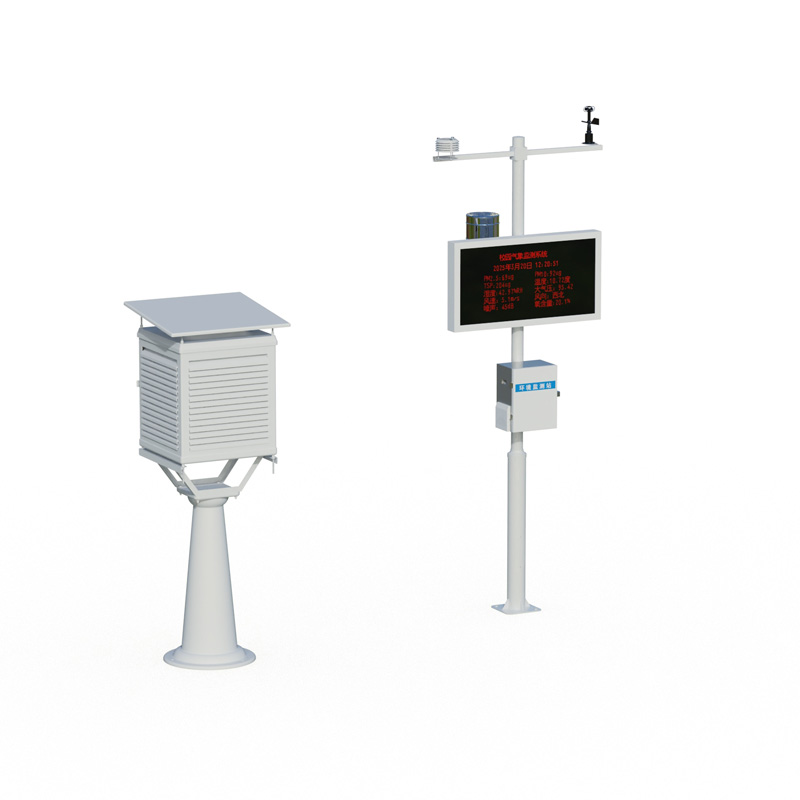
Outdoor Weather Station is a research-grade meteorological observation device designed specifically for teaching scenarios. It integrates sensors, a data logger, an LED screen, and a cloud platform, supporting GPRS wireless transmission and mains power. It automatically collects data such as wind speed, wind direction, temperature, and humidity, helping students understand meteorological science through real-world observation.
Outdoor Weather Station is an unmanned ground-based meteorological observation facility that automatically collects various meteorological data, including wind speed, wind direction, temperature, and humidity, and transmits them through multiple communication methods. Unlike traditional single-use temperature and humidity measuring devices, Outdoor Weather Station is a complete training system integrating data acquisition, intelligent transmission, large-screen display, cloud analysis, and manual verification. This system moves meteorological teaching from textbooks to real-time observation, allowing students to obtain local meteorological data in real time on campus and observe weather patterns.
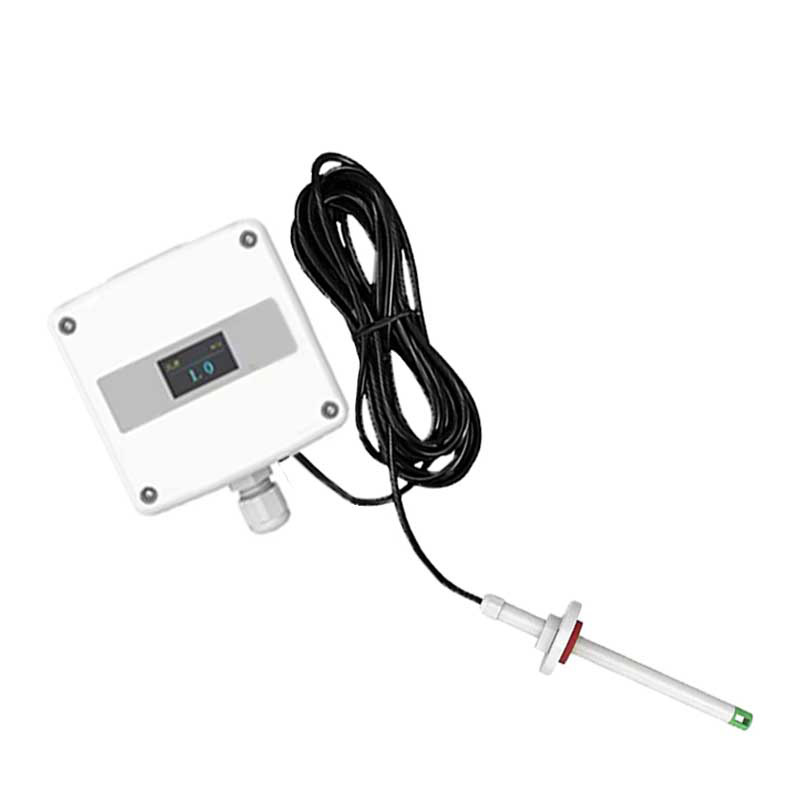
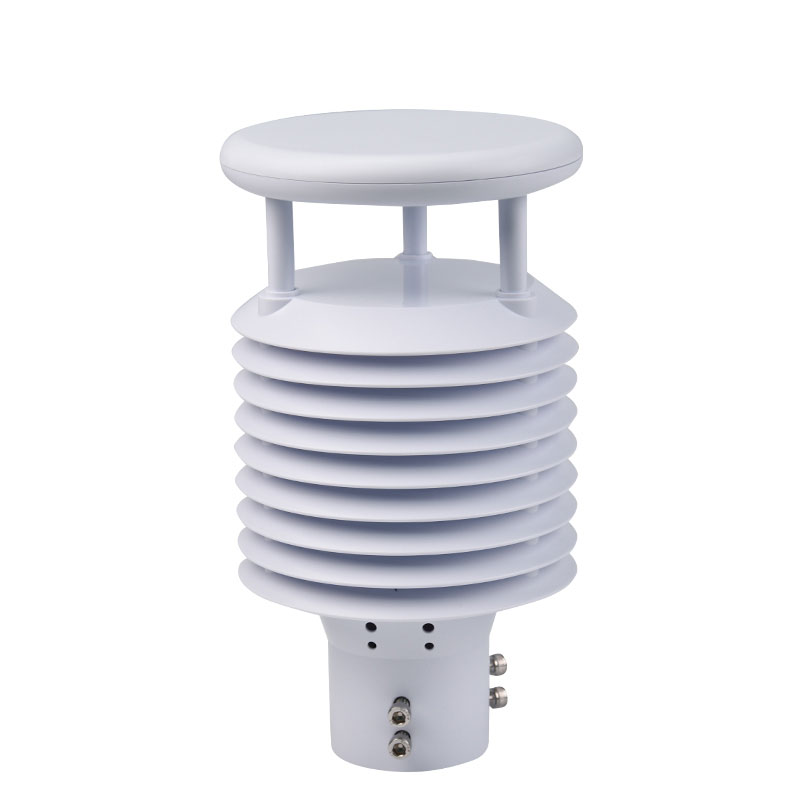
The hardware components of Outdoor Weather Station include sensors, a support pole, an equipment box, an LED screen, a data logger, a cloud platform, and a fiberglass Stevenson screen (containing dry-bulb and wet-bulb thermometers). The sensors are responsible for collecting meteorological elements such as temperature, humidity, wind speed, wind direction, light intensity, atmospheric pressure, and rainfall. The data logger processes and stores the sensor data, with a data storage capacity of no less than 500,000 records. An LED screen measuring 1 meter by 0.5 meters is used to display observation data in real time. A dry-bulb and wet-bulb thermometer inside the fiberglass Stevenson screen provides a means of manual calibration; students can compare manual readings with automatically collected data to understand the differences between the two observation methods.
In terms of transmission, Outdoor Weather Station primarily uses GPRS wireless transmission, with wired transmission optional. Power is supplied by mains electricity to ensure stable operation. The cloud platform supports direct access via mobile phones and PC browsers without additional software installation, enabling real-time data display, historical data query, data curve analysis, and data export. Teachers and students can use the cloud platform to view meteorological data trends and conduct research-based learning projects, such as the impact of campus microclimate on vegetation growth.
Outdoor Weather Station has a low construction threshold; the equipment is highly integrated, consumes little power, can be quickly installed, and is suitable for the campus environment. Observation sites should be selected in open, stable areas, and instrument layout should follow the principle of higher elevation in the north and lower in the south. From elementary school to university, schools at different levels can configure meteorological stations of appropriate specifications according to their teaching needs.
As more and more schools introduce meteorological data collection and analysis, meteorological science education is shifting from passive listening to active observation. Students master scientific methods and cultivate data thinking and research capabilities through real data collection and analysis, which is precisely the core value of meteorological data collection and analysis as a teaching tool.
Sales Manager:Ms. Emily Wang
Tel, Whatsapp:+86 15898932201
Email:info@fengtutec.com
Add:No. 155 Optoelectronic Industry Accelerator, Gaoxin District, Weifang, Shandong, China