Meteorological environment monitoring equipment supplier
Insist on doing high-precision customer favorite technology products

Meteorological environment monitoring equipment supplier
Insist on doing high-precision customer favorite technology products

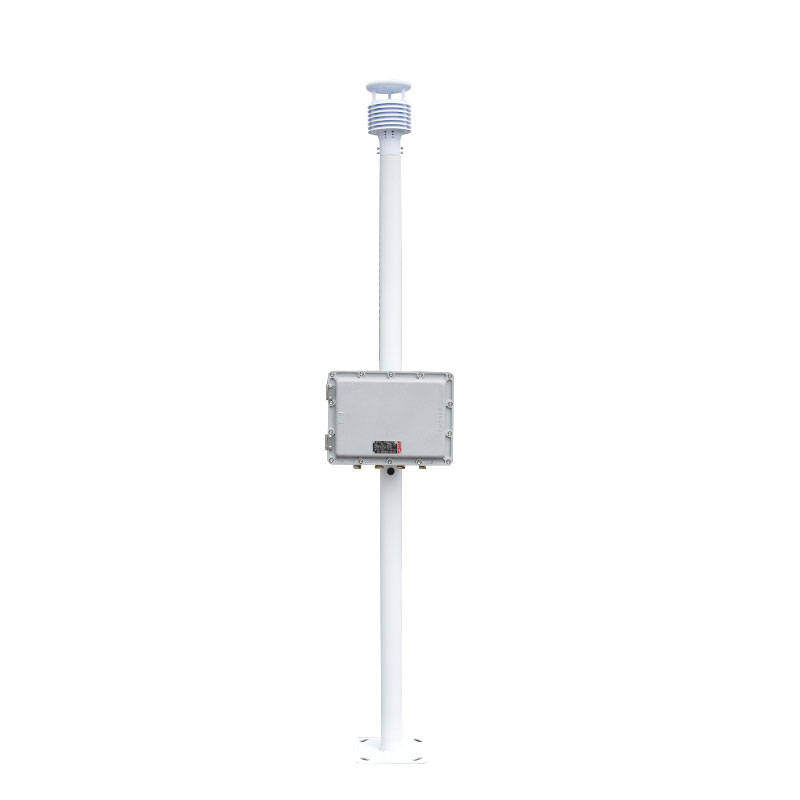
Explosion-proof weather stations integrate monitoring of five key meteorological parameters: wind speed, wind direction, temperature, humidity, and air pressure. They employ an intrinsically safe explosion-proof design and a five-protection structure, connecting to the central control room's PLC and DCS systems via wired communication. They are suitable for flammable and explosive environments such as chemical plants, oil depots, tunnels, and mines.
An explosion-proof weather station is an integrated meteorological monitoring device specifically designed for flammable and explosive environments such as chemical plants and oil depots. This device integrates data acquisition, storage, and communication uploading, enabling real-time monitoring of five key meteorological parameters: temperature, humidity, wind speed, wind direction, and atmospheric pressure. Unlike ordinary weather stations, explosion-proof weather stations have stringent safety requirements. All components must pass national explosion-proof certification, such as Ex ia IIC T4 Ga level, ensuring that electrical sparks or high temperatures will not cause safety accidents in explosive gas environments.
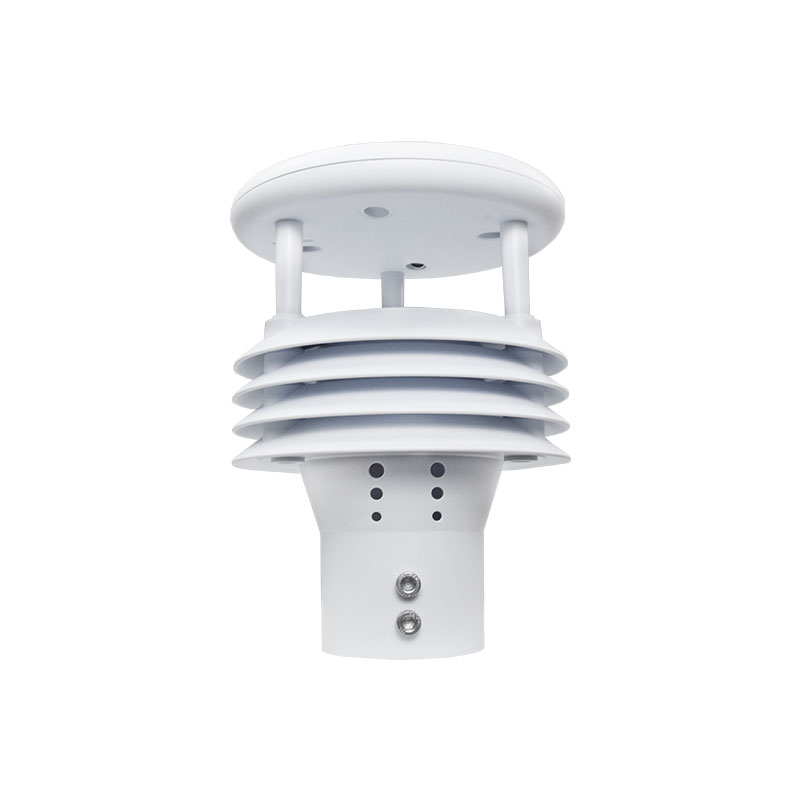
Technically, explosion-proof weather stations generally employ ultrasonic measurement technology to achieve high-precision detection of wind speed and direction. The equipment features a concealed ultrasonic probe on its top, calculating wind speed and direction by emitting continuously variable frequency ultrasonic signals and measuring the time or phase difference of signal propagation. This design avoids the wear and tear problems of traditional mechanical anemometers and eliminates the risk of static electricity generated by mechanical friction. Temperature and humidity are detected using diode junction voltage method and capacitive sensors, respectively, while atmospheric pressure is measured using a piezoresistive sensor. The temperature range is -40℃ to 85℃, humidity range is 0 to 100%RH, and pressure range is 300 to 1100 hPa.
In terms of protection, the explosion-proof weather station adopts a five-proof design concept: waterproof, explosion-proof, dustproof, shockproof, and corrosion-resistant, with protection levels generally reaching IP66 or higher. The equipment casing is made of high-strength explosion-proof materials such as 316L stainless steel or aluminum alloy, and the sensor casing is made of ASA corrosion-resistant material, capable of resisting corrosive gases and environmental erosion commonly found in chemical plants. The equipment's operating temperature range covers -40℃ to 85℃, enabling long-term stable operation under various extreme climatic conditions.
In terms of data transmission and system integration, the explosion-proof weather station supports wired communication methods such as RS485 and RS232, adopts the standard Modbus-RTU protocol, and can seamlessly interface with the PLC and DCS systems in the central control room of chemical plants. The host computer software supports standalone data reception, storage, viewing, and analysis, with a data storage capacity of no less than 500,000 records. When monitored meteorological parameters exceed set thresholds, the system can automatically trigger an early warning and notify relevant personnel via audible and visual alarms or SMS messages.
In practical applications, explosion-proof weather stations are widely deployed in chemical production areas, oil depot tank areas, gas stations, coal mine shafts, tunnel projects, and other scenarios. In the petrochemical industry, the equipment can monitor changes in wind speed and direction in open areas, providing crucial data support for early warning of combustible gas diffusion; in underground coal mines, it can monitor wind speed and direction at the shaft entrance in real time, assisting in optimizing the operation of the ventilation system and preventing gas accumulation; in oil depot areas, it can combine temperature, humidity, and air pressure data to assess fire risk levels. Explosion-proof weather stations provide reliable technical support for the safe production management of high-risk industries through accurate meteorological monitoring and real-time data transmission.
Sales Manager:Ms. Emily Wang
Tel, Whatsapp:+86 15898932201
Email:info@fengtutec.com
Add:No. 155 Optoelectronic Industry Accelerator, Gaoxin District, Weifang, Shandong, China