Meteorological environment monitoring equipment supplier
Insist on doing high-precision customer favorite technology products

Meteorological environment monitoring equipment supplier
Insist on doing high-precision customer favorite technology products

This document provides a complete solution for building a six-element weather station, covering five key components: weather sensors, data logger, solar power system, mounting pole and bracket, and cloud platform. It details the entire process from needs analysis to implementation, and is applicable to various fields such as agriculture, construction sites, and environmental monitoring.
Building a six-element weather station is fundamental infrastructure for obtaining accurate environmental data. Its core objective is to achieve real-time monitoring and recording of temperature, humidity, wind speed, wind direction, atmospheric pressure, and precipitation, serving meteorological forecasting, climate research, and various professional fields. A complete construction plan is not simply a collection of equipment, but a system engineering project that begins with clearly defined objectives and ends with stable operation.
Rigorous needs analysis and planning are essential before starting the project. The primary task is to determine the specific purpose of the weather station. Different application scenarios have different requirements for equipment parameters, installation location, data accuracy, and communication methods. For example, agricultural monitoring focuses on microclimates in the field, paying attention to soil moisture and evaporation; construction site safety emphasizes real-time wind speed warnings, requiring high reliability and remote monitoring capabilities; urban environmental monitoring usually requires standard station configurations that comply with national standards. After clarifying the purpose, a site survey is necessary to assess the surrounding electromagnetic environment, obstructions, and installation conditions, and to plan the data flow and the final application platform.
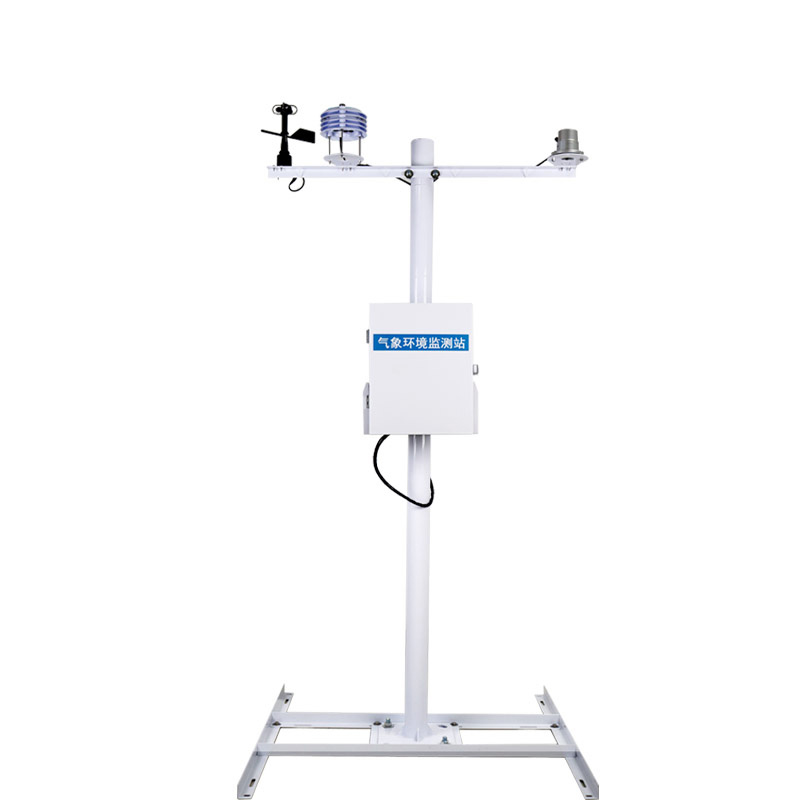
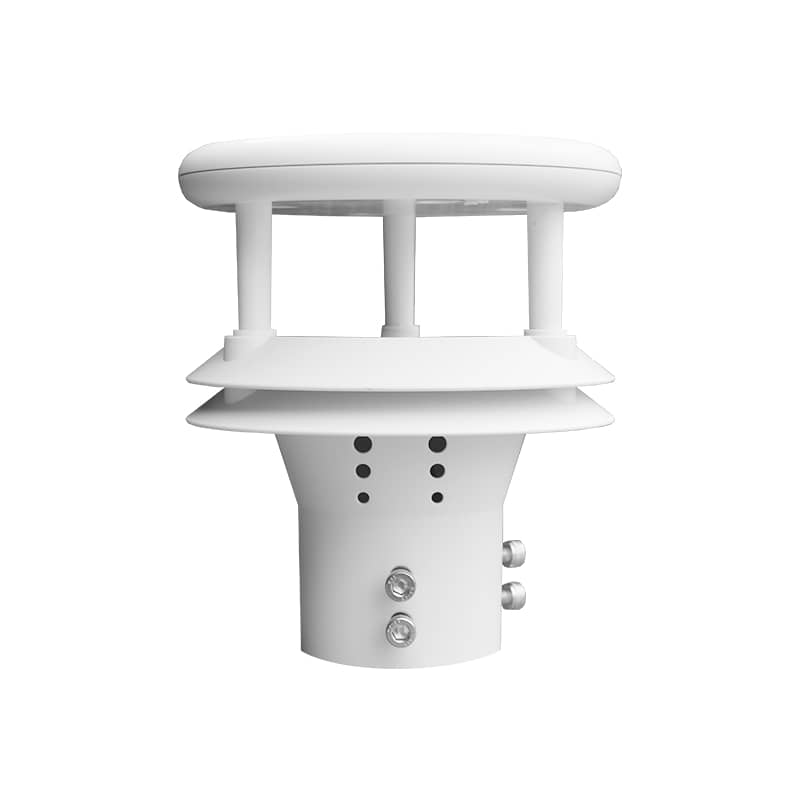
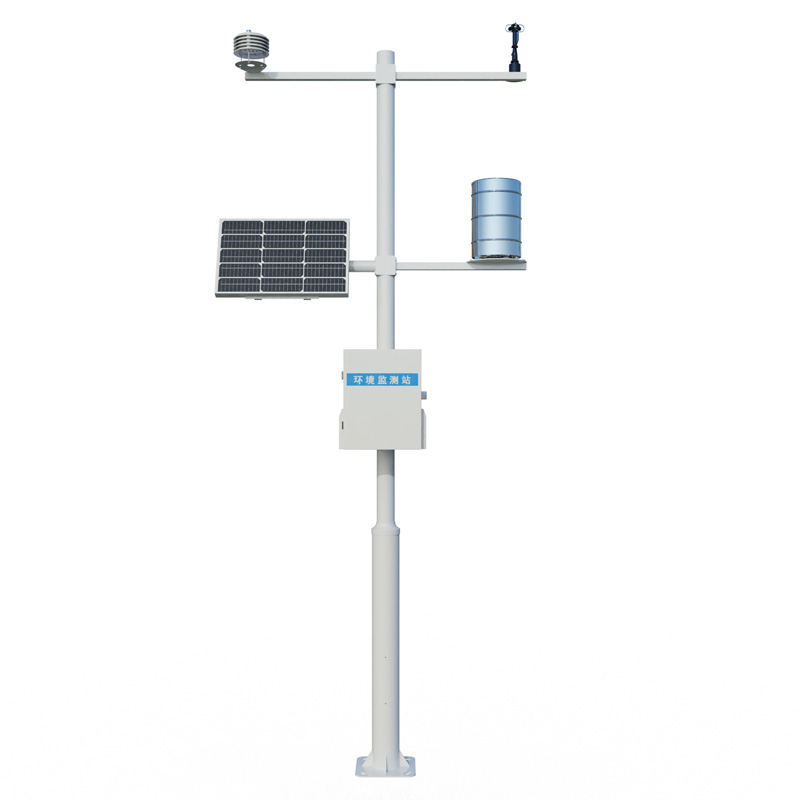
After planning, the equipment selection and implementation phase begins. The system mainly consists of five parts. Weather sensors are the sensing layer, responsible for accurately measuring the six core meteorological elements. Selection requires balancing accuracy, stability, environmental adaptability, and maintenance cycle. The data logger is the control core, responsible for collecting signals from each sensor, performing preliminary processing, storage, and remote transmission. Key indicators include interface compatibility, data storage capacity, communication protocols (such as 4G/NB-IoT), and power consumption. The solar power system provides energy for remote sites; the battery capacity and solar panel power must be calculated based on the total power consumption of the equipment and local sunshine conditions to ensure continuous operation even during cloudy and rainy weather. The mounting pole and bracket are used to securely fix all equipment; the height must meet observation standards, the material must be corrosion-resistant and wind-resistant, and the design should include sensor mounting arms and equipment boxes, and consider lightning protection and grounding. The cloud platform is the final destination of the data, providing data reception, storage, visualization, analysis, early warning, and management functions. The platform should support multi-site access, historical data querying, threshold-based alarming, and data export.
From planning to implementation, the construction process should proceed step by step. After selecting specific equipment models based on the plan, installation and commissioning should be carried out. Installation must strictly adhere to specifications to ensure accurate sensor orientation and height. Commissioning includes local data reading tests and remote communication tests. After the system goes online, a regular maintenance system should be established, including sensor calibration, equipment cleaning, power supply system inspection, and data quality verification, to ensure the long-term stable operation of the weather station and the continuous production of valuable meteorological data.
Sales Manager:Ms. Emily Wang
Tel, Whatsapp:+86 15898932201
Email:info@fengtutec.com
Add:No. 155 Optoelectronic Industry Accelerator, Gaoxin District, Weifang, Shandong, China