Meteorological environment monitoring equipment supplier
Insist on doing high-precision customer favorite technology products

Meteorological environment monitoring equipment supplier
Insist on doing high-precision customer favorite technology products

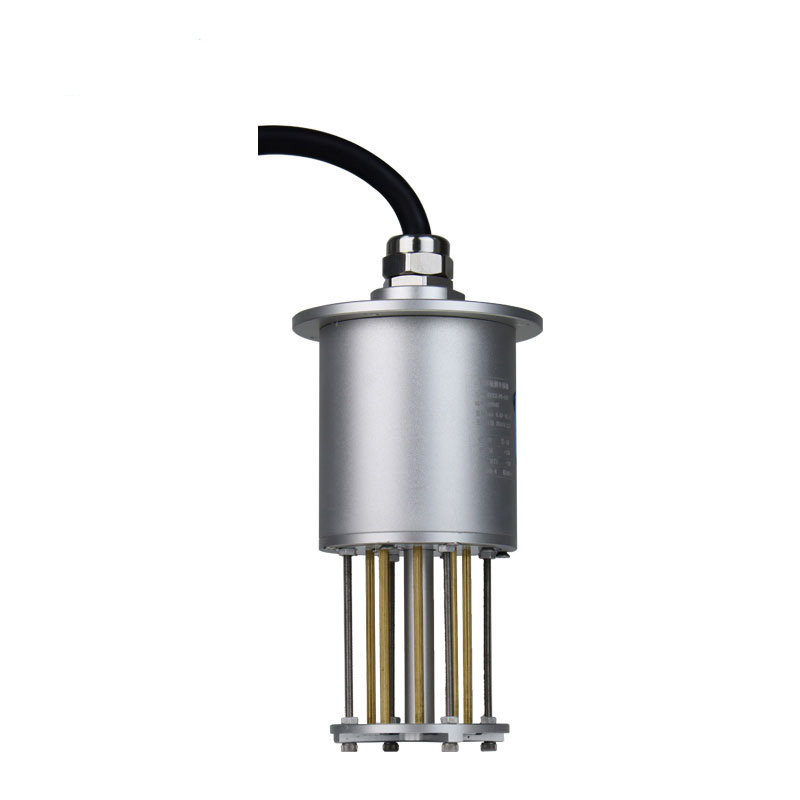
Ice sensor is an automated monitoring device specifically designed for the power industry. Typically installed on power transmission towers, it provides real-time information on ice accumulation on nearby transmission lines. It monitors the differences in feedback from different substances such as ice, water, and air based on microwave signals. By analyzing signal strength and ice distribution information, it calculates the ice layer thickness and effectively distinguishes between ice, water, and frost. When ice accumulation reaches a certain thickness, it can lead to serious accidents such as pole collapse, tower collapse, and line breakage. The application of this sensor transforms the approach from passive response to proactive early warning, ensuring the safe and stable operation of the power grid during winter.
Hazards of Power Line Icing and the Necessity of Monitoring
In low-temperature, rainy, and snowy weather, supercooled water droplets or ice crystals attach to transmission lines, forming ice. Ice accumulation on transmission lines poses multiple safety hazards, including increased line sag, increased stress on poles and towers, and decreased insulation performance. When the ice thickness exceeds the design load capacity, it can easily trigger serious accidents such as pole collapse, tower collapse, and line breakage, causing damage to the power grid and widespread power outages. Historically, severe ice storms have damaged more than 70% of power poles and lines in a region. Traditional manual line inspection methods face high safety risks and low inspection efficiency in winter due to mountainous terrain, steep roads, and widespread hidden ice. Therefore, deploying automated ice monitoring sensors in harsh environments and areas difficult for personnel to access is a necessary choice to ensure the safety of the power grid.
Microwave Detection Technology Principle
Modern Ice sensor mainly uses microwave detection technology. Its core principle is to utilize the differences in response generated when microwave signals penetrate or reflect off different media. The sensor emits a specific frequency microwave signal to the sensitive area. When the signal encounters air, water, or ice, the intensity, frequency, and other parameters of the reflected signal change accordingly. By precisely analyzing the characteristics of these reflected signals and combining them with the ice distribution information in the sensor area, the ice thickness can be accurately calculated. The key advantage of this technology is its ability to effectively distinguish between "ice" and "water," avoiding false alarms and unnecessary activation of de-icing measures caused by misinterpreting rainwater or dew as ice accumulation. Sensor Key Performance and Application Installation
A typical Ice sensor sensor possesses the following technical specifications: a detection resolution of up to 0.01 millimeters, a maximum measurement thickness of typically 50 millimeters, a wide operating temperature range (stable operation from -40°C to +85°C), and an IP67 protection rating to adapt to harsh outdoor environments. In terms of communication, it supports RS485 interface and Modbus RTU protocols, facilitating integration into power monitoring systems. The sensor is generally installed on the transmission line towers that require monitoring. To address power supply issues in remote mountainous areas, the system is usually equipped with solar power generation devices, supplemented by inductive power harvesting technology, ensuring continuous operation even during periods of insufficient sunlight in winter. Data is transmitted back to the monitoring center via a mobile communication network.
Actual Applications and Results
These sensors have been put into practical use in power grids in many locations and have achieved significant results. For example, on the power lines of Ya'an Power Group, the installed intelligent ice accretion monitoring devices can transmit data in real time to the backend system, allowing maintenance personnel to monitor ice accretion conditions from the monitoring center, significantly improving monitoring efficiency and safety. Guizhou Power Grid has established a large-scale ice accretion monitoring system, using hundreds of monitoring devices to predict ice accretion conditions on transmission lines for the next three days, with a prediction accuracy exceeding 90%. This has successfully promoted a strategic shift in power grid ice prevention and disaster relief from "passive ice resistance" to " proactive ice prevention." These "ice-watching elves" installed on the towers provide accurate data in real time during ice accretion weather and also monitor the line corridor environment during normal times, playing a multi-faceted protective role.
As one of the key devices in the construction of intelligent power grids, the Ice sensor sensor provides accurate and real-time ice accretion data, providing a scientific basis for the early deployment of ice melting and removal measures and preventing large-scale ice disaster accidents. With continuous technological advancements and widespread application, this sensor will continue to play an irreplaceable role in ensuring the safe and stable operation of the power "lifeline" under extreme weather conditions.
Sales Manager:Ms. Emily Wang
Tel, Whatsapp:+86 15898932201
Email:info@fengtutec.com
Add:No. 155 Optoelectronic Industry Accelerator, Gaoxin District, Weifang, Shandong, China