Meteorological environment monitoring equipment supplier
Insist on doing high-precision customer favorite technology products

Meteorological environment monitoring equipment supplier
Insist on doing high-precision customer favorite technology products

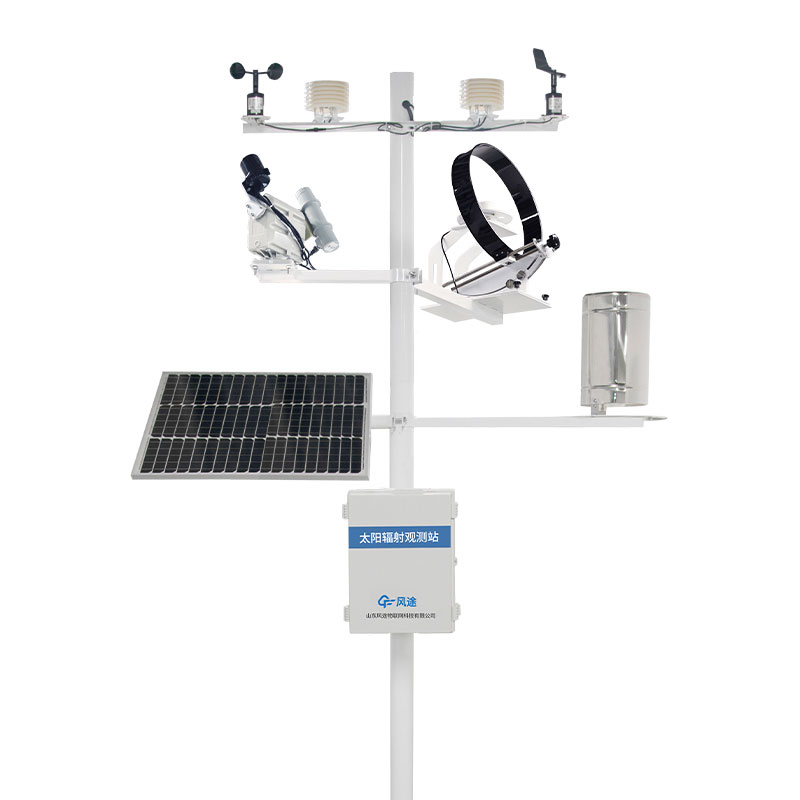
Solar radiation meters are highly integrated, low-power automatic meteorological observation devices. They require no commissioning and can be quickly deployed, making them suitable for emergency short-term meteorological observations and mobile meteorological monitoring. The products meet ISO9060 and WMO technical specifications, covering measurement ranges such as irradiance 0-2000 W/m² and sunshine duration 0-6500 h, and are widely used in meteorology, solar energy utilization, agriculture, and forestry.
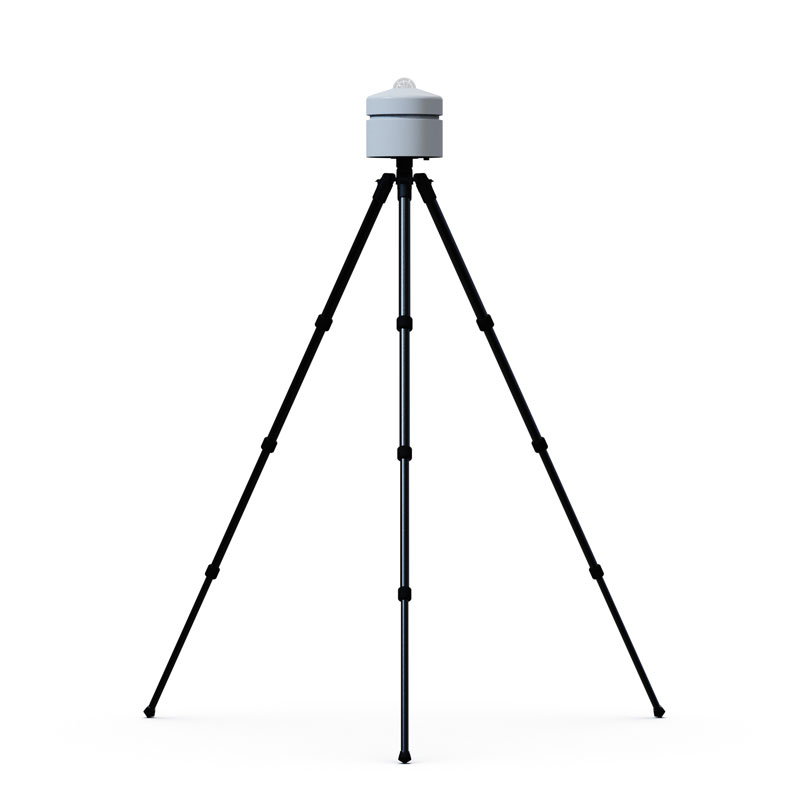
Solar radiation meters are changing the traditional deployment methods for meteorological observations. In the past, on-site installation of a solar radiation observation system often required technicians to spend several hours completing commissioning and calibration. Now, "commission-free and rapid deployment" is a core feature of the new generation of solar total radiation detectors. These highly integrated, low-power automatic meteorological observation devices can be deployed manually by a single person in a short time, significantly shortening observation preparation time.
Behind the commission-free design is an integrated and compact structure. The device highly integrates sensors, data acquisition modules, and communication units, reducing the size and weight of the equipment, making it easy to carry and install in the field. The built-in temperature compensation module automatically corrects for the impact of ambient temperature changes on measurement results, ensuring data stability under different seasons and climatic conditions. Low-power circuitry and a built-in high-capacity lithium battery extend field endurance, allowing for continuous operation for extended periods. In emergency situations such as natural disaster relief and sudden event response, the equipment can be rapidly deployed and put into use, providing real-time meteorological data support for rescue and decision-making departments.
From a working principle perspective, the solar radiation meter uses a wire-wound electroplated multi-junction thermopile as the sensing element, with a high-absorption black coating on its surface. When solar radiation shines on the sensing element, the hot and cold junctions generate a thermoelectric potential difference, which outputs a signal proportional to the solar irradiance. This measurement method has excellent stability and reliability, accurately reflecting changes in solar radiation intensity in real time. A quartz glass cover is installed outside the sensing element, effectively preventing interference from environmental factors such as wind, rain, and dust on measurement accuracy.
In terms of performance parameters, the irradiance measurement range is 0-2000 W/m², the resolution is 1 W/m², and the accuracy is <±3.1%. The solar radiation meter has a range of 0-6500 hours, a resolution of 0.1 hours, and an accuracy of <0.2 hours. Hourly, daily, and total cumulative energy parameters provide a complete quantitative basis for assessing solar energy resources. The product complies with ISO 9060 and WMO (World Meteorological Organization) technical specifications, and also meets the national standard GB/T 19565-2017 Total Radiation Sensors.
In terms of applications, solar radiation meters have a very wide range of applications. Meteorological departments use them to monitor changes in solar radiation intensity in real time, providing data support for climate prediction and climate change research. In agriculture, they monitor solar radiation in farmland, providing a scientific basis for irrigation, fertilization, shading, and other agricultural activities. The solar energy industry uses the equipment to monitor radiation intensity in real time, optimizing the operation and maintenance of photovoltaic power generation systems. Environmental monitoring departments analyze the impact of solar radiation on the atmospheric environment, water bodies, and soil. In scientific research and teaching scenarios, the equipment supports field investigations and mobile research tasks, providing basic observational data for research in ecology, environment, materials science, and other fields. This makes solar radiation meters not only meteorological observation equipment, but also an indispensable basic tool for solar energy utilization assessment, agricultural production guidance, and environmental monitoring research.
Sales Manager:Ms. Emily Wang
Tel, Whatsapp:+86 15898932201
Email:info@fengtutec.com
Add:No. 155 Optoelectronic Industry Accelerator, Gaoxin District, Weifang, Shandong, China