Meteorological environment monitoring equipment supplier
Insist on doing high-precision customer favorite technology products

Meteorological environment monitoring equipment supplier
Insist on doing high-precision customer favorite technology products

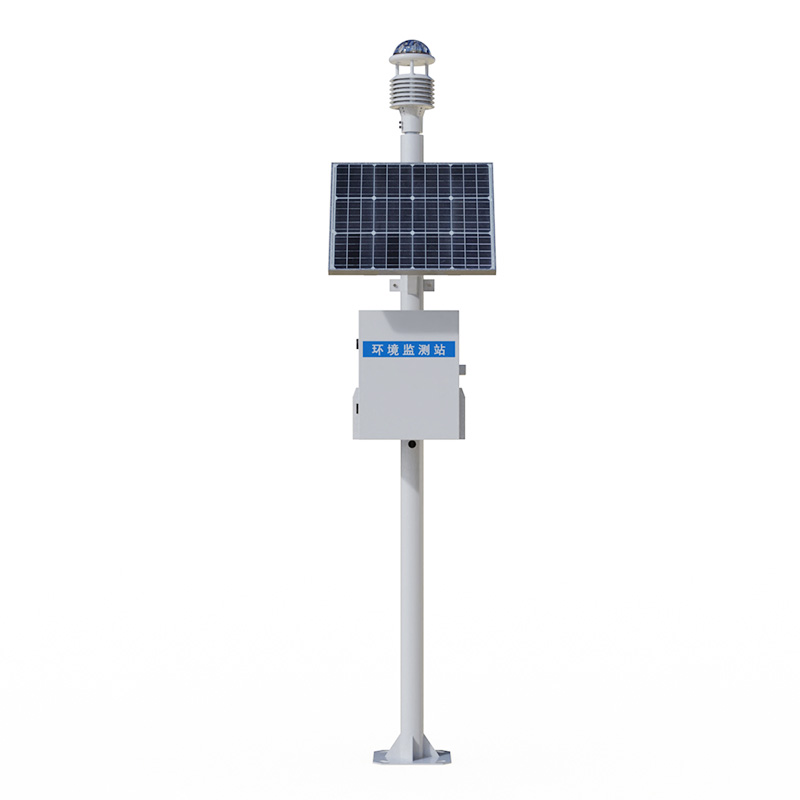
Environmental Monitoring System is a specialized facility for the real-time collection and recording of various meteorological and environmental elements. Its core function is to continuously acquire accurate data, providing a scientific basis for environmental assessment and management.
The monitoring station continuously observes basic meteorological parameters such as wind speed, wind direction, temperature, humidity, and air pressure. This data forms the basis for analyzing local climate conditions and assessing atmospheric diffusion capacity. Simultaneously, the station integrates monitoring of light intensity and optical rainfall, providing crucial information for studying regional solar thermal resources and the water cycle.
Regarding environmental quality monitoring, the station focuses on measuring the concentration of particulate matter in the air. Its real-time monitoring of PM2.5 and PM10 directly reflects the air pollution status and is an important basis for public health protection and pollution source tracing. In addition, the noise monitoring module quantifies and records the intensity of ambient sound to assess the quality of the acoustic environment and support noise pollution prevention and control efforts.
These real-time observation data are centrally processed and stored through data acquisition devices and transmitted to a central database via wired or wireless communication networks. Environmental protection departments, research institutions, and meteorological units can access and analyze these continuous data sequences through a dedicated platform. Based on long-term observation results, they can analyze the changing trends of environmental elements, identify pollution processes, and provide early warnings of potential environmental risks.
Modern Environmental Monitoring System systems are designed with a focus on system reliability and accuracy. Sensors must comply with relevant metrological standards and undergo regular calibration and maintenance to ensure data validity and comparability. Station site selection follows scientific guidelines, typically located in representative areas to avoid localized human interference, thereby ensuring that the acquired data accurately reflects the overall environmental condition of the region.
In summary, Environmental Monitoring System, through integrated automatic monitoring, has constructed a sensing network covering key meteorological and environmental elements. Its continuous and accurate data output is an indispensable foundational resource for conducting environmental quality assessments, supporting ecological research, and assisting environmental decision-making, playing a crucial technical support role in the construction of ecological civilization.
Sales Manager:Ms. Emily Wang
Tel, Whatsapp:+86 15898932201
Email:info@fengtutec.com
Add:No. 155 Optoelectronic Industry Accelerator, Gaoxin District, Weifang, Shandong, China