Meteorological environment monitoring equipment supplier
Insist on doing high-precision customer favorite technology products

Meteorological environment monitoring equipment supplier
Insist on doing high-precision customer favorite technology products

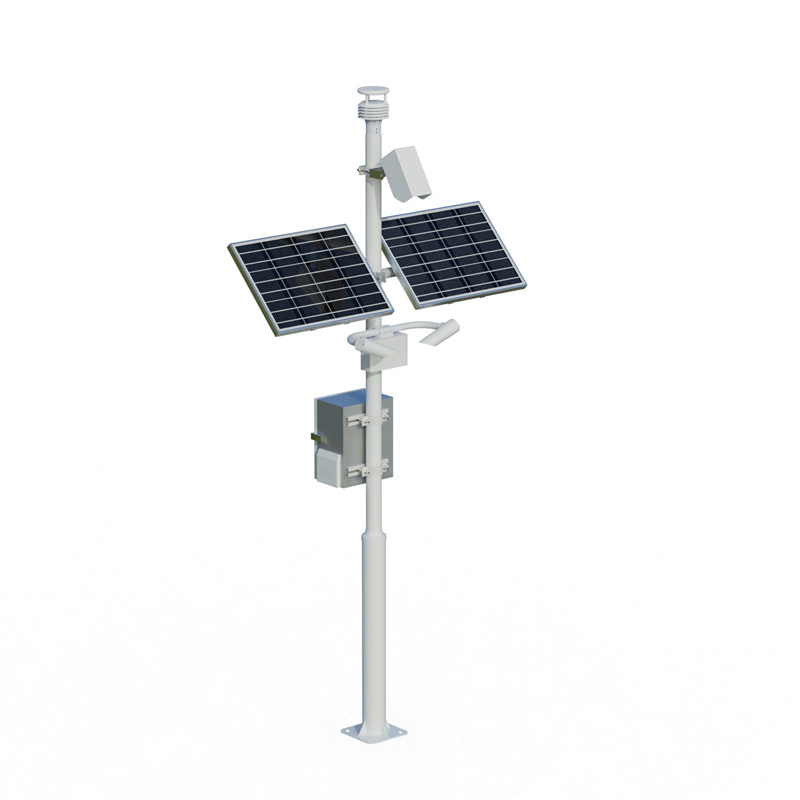
Highway weather station refers to specialized observation facilities deployed along highways to provide real-time monitoring of key meteorological elements such as visibility, wind speed, wind direction, temperature, humidity, atmospheric pressure, rainfall, and road surface conditions. Through scientifically planned deployment across specific road sections, it achieves all-weather, high-precision data collection, providing core meteorological data support for highway safety management and assisting management departments in issuing timely warnings and implementing precise traffic control.
Highway weather station is a crucial infrastructure for ensuring road traffic safety. These observation stations are typically deployed in critical road sections with complex weather conditions and high accident rates, such as high-altitude areas, large bridges, tunnel entrances and exits, and areas prone to fog and icing. Their core task is to continuously and accurately collect real-time meteorological data along the traffic route.
The monitored elements comprehensively cover key meteorological parameters affecting driving safety. Visibility monitoring directly relates to determining visibility distance under adverse weather conditions such as fog, haze, and heavy precipitation. Wind speed and direction monitoring are crucial for crosswind warnings, especially on open road sections such as bridges and mountain passes. Temperature and humidity data are used to predict the risk of road icing, snow accumulation, or high-temperature softening. Atmospheric pressure changes can serve as a reference for weather system activity. Rainfall monitoring provides accurate precipitation intensity information. Road surface condition sensors can directly detect whether the road surface is dry, wet, icy, or snowy, a specialized function not available in other weather stations.
These weather stations form a continuous networked monitoring system. Data is transmitted in real-time at a high frequency via wired or wireless communication to the data platform of the highway monitoring center. The platform integrates, analyzes, and visualizes the data. When any monitored value exceeds the preset safety threshold, the system automatically triggers a warning mechanism.
Based on this precise real-time information, highway management authorities can make scientific control decisions. Before or during the initial stages of adverse weather, warning information can be promptly disseminated to drivers through variable message signs, broadcasts, navigation software, and other channels. Management departments can dynamically implement control measures such as speed limits, vehicle restrictions, staggered releases, and even temporary closures of certain road sections, preventing and reducing traffic accidents and congestion caused by adverse weather conditions.
The construction of this system significantly enhances the highway's ability to respond to meteorological disasters. It has transformed the previous situation of relying on broad-area weather forecasts and lacking precise data for specific road sections, achieving a shift from macroscopic forecasting to microscopic real-time sensing. Continuous, all-weather monitoring ensures data acquisition at any time, including nights and holidays, filling monitoring gaps.
In short, Highway weather station, by providing accurate localized meteorological and road surface data, has become an indispensable sensing node in modern intelligent transportation management systems. It directly contributes to improving driving safety and traffic efficiency, and is a crucial technological support for achieving proactive and refined safety management on highways.
Sales Manager:Ms. Emily Wang
Tel, Whatsapp:+86 15898932201
Email:info@fengtutec.com
Add:No. 155 Optoelectronic Industry Accelerator, Gaoxin District, Weifang, Shandong, China