Meteorological environment monitoring equipment supplier
Insist on doing high-precision customer favorite technology products

Meteorological environment monitoring equipment supplier
Insist on doing high-precision customer favorite technology products

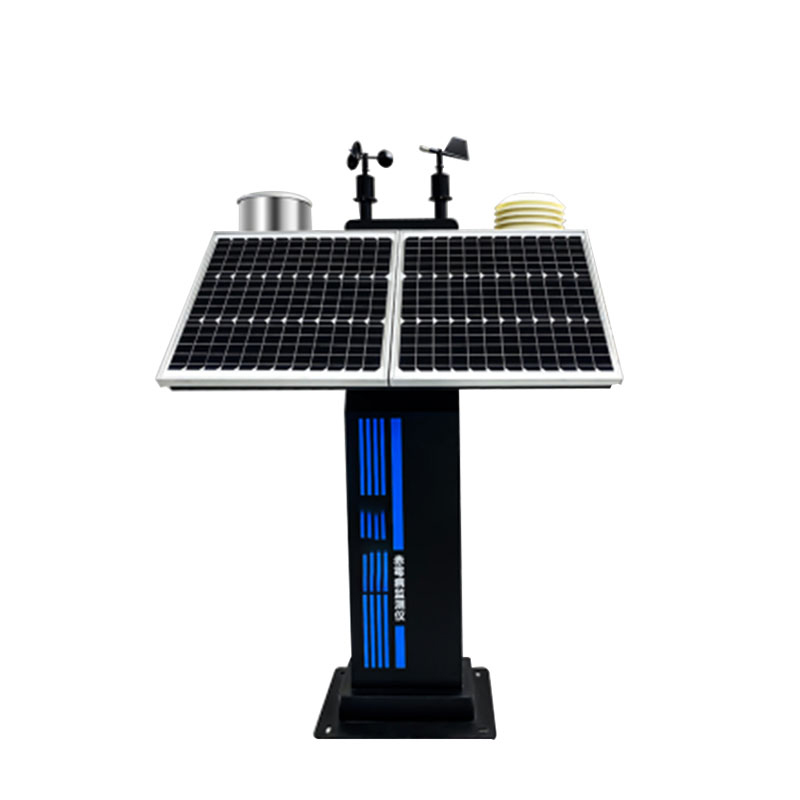
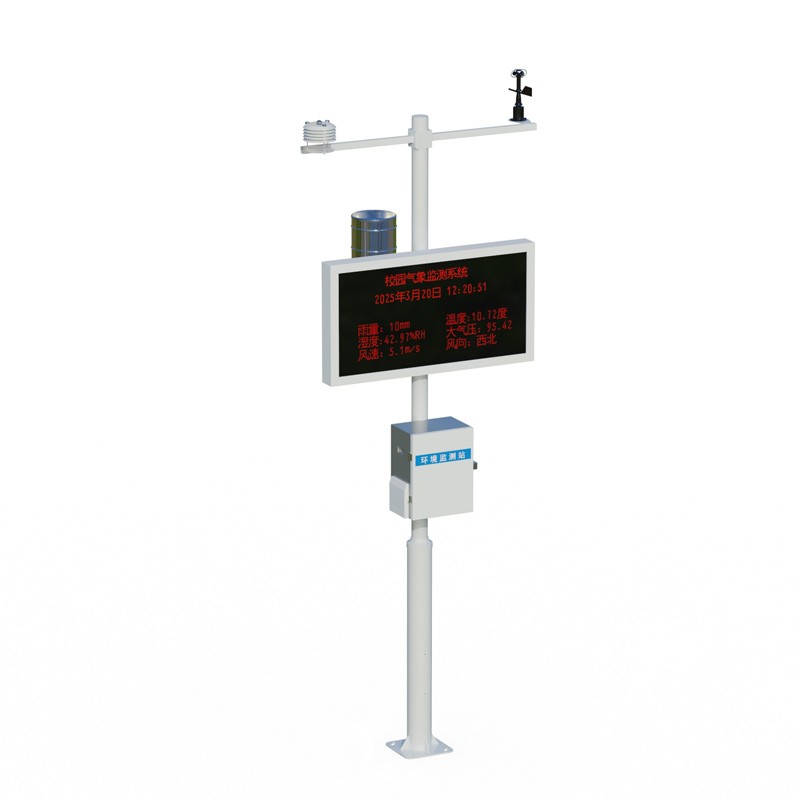
A campus weather station is a research-grade educational tool that integrates sensors, a mounting mast, an equipment enclosure, an LED display, and a data logger. It supports 4G data transmission and mains power, allowing for rapid installation and stable, long-term operation. By providing real-time data on temperature, humidity, wind direction and speed, and precipitation, it offers a continuous stream of observational material for science classes, enabling students to grasp the actual processes of weather change through hands-on recording and comparison.
In primary and secondary schools, the value of a campus weather station is most evident in its practical application within the curriculum. These stations are typically positioned at the edge of a playground or in a corner of a garden—away from the obstruction of school buildings or tall trees—to ensure that sensor readings remain free from localized environmental interference. At scheduled times each day, students on duty visit the station to check the real-time data on the LED display, noting down figures such as temperature, wind direction, and rainfall into a logbook. While this process may seem simple, it transforms abstract textbook concepts like "measurement" and "recording" into tangible, real-world activities. Teachers can then guide students to compare current data with records from the previous day or week—identifying shifts in temperature, changes in wind direction, or fluctuations in air pressure before and after a rainfall.
With the addition of a cloud platform, data is no longer confined to paper. Once the data logger uploads the sensor readings, students can access historical trends via a computer or mobile browser, observing how specific meteorological variables fluctuate throughout the day. This visual representation—far more engaging than merely transcribing numbers—naturally sparks inquiry: Why is wind speed often higher in the afternoon than in the early morning? Why does humidity gradually decline after several consecutive sunny days? Because students derive these questions directly from the data trends, their discussions become grounded in specific evidence, moving well beyond generic, superficial questions like "What is the weather like today?"
Furthermore, campus weather stations serve as a platform for science outreach and education. Many schools align weather observation with specific units in their science curriculum: younger students focus on identifying instruments and recording phenomena, while older students engage in data analysis and the preparation of concise observational reports. Interest groups use their extracurricular time to compile weekly data, sharing current campus weather conditions via class bulletin boards or the school broadcasting system—effectively transforming raw observations into accessible information. This end-to-end process—from data collection to dissemination—helps students grasp the entire chain behind the data, revealing that it is far more than just a series of flickering numbers on a screen.
The campus weather station’s low power consumption and ease of installation lower the barrier for long-term maintenance. A mains power supply eliminates the need for frequent battery changes; the LED display remains clearly legible even in bright outdoor light; and the standardized setup—featuring mounting poles and equipment enclosures—ensures that routine inspections follow a clear, systematic procedure. Only when the equipment operates reliably can teachers confidently incorporate the weather station into their semester lesson plans, and students, in turn, can establish a consistent rhythm of observation. The true value of a campus weather station lies not in the complexity of the instruments themselves, but in its ability to provide a steady stream of authentic, continuous data—turning meteorological science from an abstract concept into a tangible, everyday reality for students.
Sales Manager:Ms. Emily Wang
Tel, Whatsapp:+86 15898932201
Email:info@fengtutec.com
Add:No. 155 Optoelectronic Industry Accelerator, Gaoxin District, Weifang, Shandong, China