Meteorological environment monitoring equipment supplier
Insist on doing high-precision customer favorite technology products

Meteorological environment monitoring equipment supplier
Insist on doing high-precision customer favorite technology products

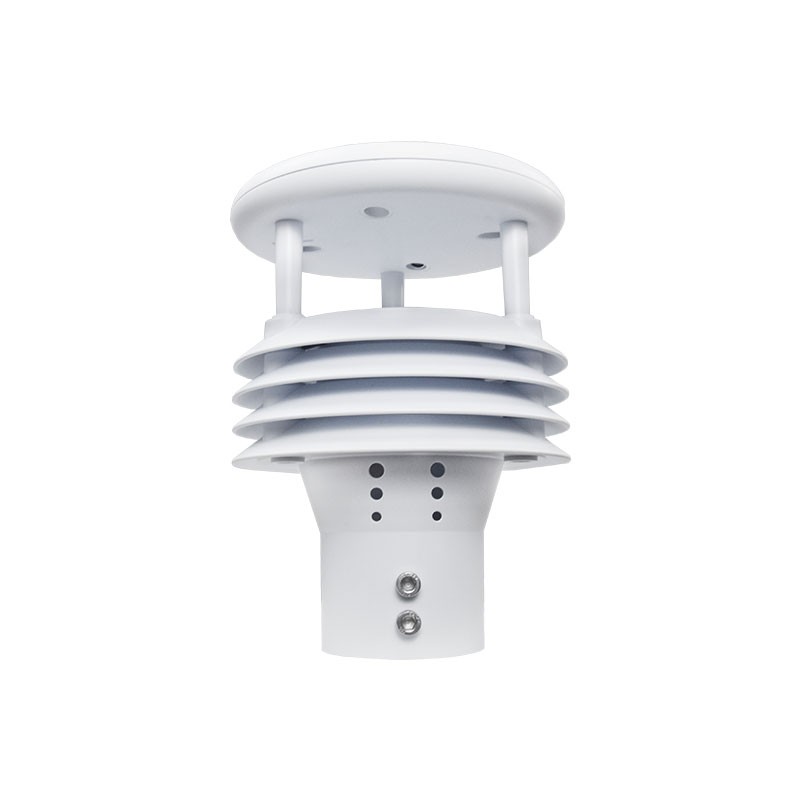
Explosion Proof Sensor integrates wind speed, wind direction, temperature, humidity, and atmospheric pressure into one device, outputting all five parameters simultaneously via an RS485 digital interface. It is suitable for 24-hour continuous online monitoring in flammable and explosive environments such as petrochemical plants, oil depots, docks, and coal mines.
Explosion Proof Sensor is an integrated meteorological monitoring device specifically designed for flammable and explosive environments. This device integrates sensors for five meteorological elements—wind speed, wind direction, temperature, humidity, and atmospheric pressure—into a highly integrated structure, achieving 24-hour continuous online monitoring of outdoor meteorological parameters. Compared to traditional miniature weather instruments, Explosion Proof Sensor overcomes the need for high-precision timers, effectively avoiding measurement inaccuracies caused by sensor start-up delays, demodulation circuit delays, and temperature changes.
Technically, Explosion Proof Sensor uses ultrasonic principles for wind speed and direction measurement. It detects wind speed and direction by emitting continuously variable frequency ultrasonic signals and measuring their relative phase. The top cover features a concealed ultrasonic probe design, avoiding interference from rain and snow accumulation and wind obstruction. Temperature measurement uses the diode junction voltage method, humidity measurement uses the capacitive principle, and atmospheric pressure measurement uses the piezoresistive principle. The entire unit has no moving parts, zero wear, requires no maintenance, and no on-site calibration.
Explosion Proof Sensor outputs five meteorological parameters to the user simultaneously via a digital communication interface. The standard configuration includes an RS485 communication interface (MODBUS protocol), with optional RS232, USB, and Ethernet interfaces, supporting real-time data reading. A wireless transmission module is optional, with a minimum transmission interval of 1 minute. The device casing is made of ASA engineering plastic, ensuring it does not discolor over many years of outdoor use. The probe uses a snap-fit design, solving the problem of loosening and inaccuracy during transportation and installation.
Explosion Proof Sensor has strict certification guarantees regarding safety. The manufacturing company possesses ISO quality management system, environmental management system, and occupational health management system certifications, holds a computer software registration certificate, and has been rated as a 3A-level credit enterprise. The equipment holds an Ex ia IIC T6 Ga high-level explosion-proof certificate, enabling safe operation in hazardous locations with explosive gases or dust.
Explosion Proof Sensor has been widely used in relatively harsh environments such as chemical plants, oil depots, tunnels, mines, petroleum facilities, docks, ships, drilling platforms, gas stations, ports, aerospace, military, pharmaceuticals, steel, machinery, finance, commerce, subways, and grain processing and storage. In these environments, Explosion Proof Sensor provides reliable meteorological data support for safe production, helping users to promptly grasp environmental changes and prevent safety accidents caused by weather conditions.
Sales Manager:Ms. Emily Wang
Tel, Whatsapp:+86 15898932201
Email:info@fengtutec.com
Add:No. 155 Optoelectronic Industry Accelerator, Gaoxin District, Weifang, Shandong, China