Meteorological environment monitoring equipment supplier
Insist on doing high-precision customer favorite technology products

Meteorological environment monitoring equipment supplier
Insist on doing high-precision customer favorite technology products

Road condition detectors utilize multispectral remote sensing technology to accurately detect the thickness of ice, snow, and water accumulation without contact with the road surface. Installation does not require road closures or road surface cutting, avoiding the traffic interference caused by traditional buried sensors, providing road management departments with an efficient and safe monitoring solution.
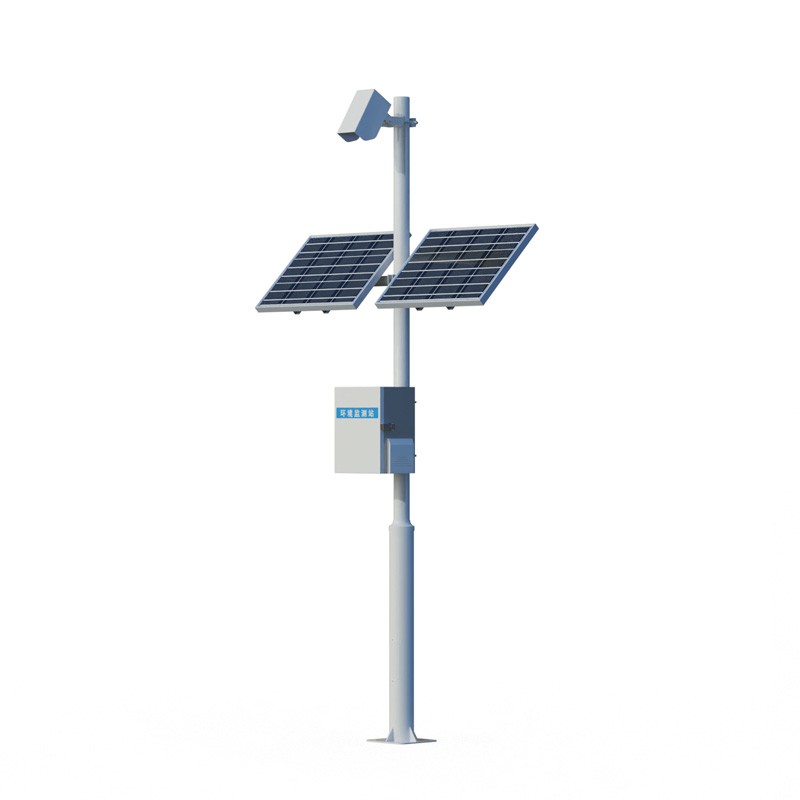
Road condition detectors are intelligent devices that use remote sensing technology to monitor the condition of the road surface in real time. Traditional buried road sensors require cutting the road surface for installation, necessitating lane closures during construction, which not only disrupts normal traffic but also causes permanent damage to the road structure. Remote sensing road condition detectors fundamentally solve this problem. They employ a non-contact detection method, allowing deployment by installing the device on a pillar along the roadside or on an existing weather station.
The core technology of this device is multispectral remote sensing measurement. The sensor has a built-in light source emitting light of a specific wavelength towards the road surface and then receives the spectral signals reflected back from the road surface. Because different substances such as water, ice, and snow have their own unique infrared spectral characteristics, the device can accurately determine whether the road surface is currently dry, wet, flooded, icy, or covered in snow by analyzing the differences in reflectance spectra. In terms of thickness measurement, the thickness measurement range for road surface water is 0.00 to 10 mm, with a resolution of 0.01 mm and an accuracy of 0.1 mm; the thickness of road surface ice and snow can also be measured, with a slipperiness output range of 0.00 to 1. The device can also be equipped with optional monitoring parameters such as road surface temperature, road surface humidity, ambient temperature and humidity, and atmospheric pressure.
In terms of installation and maintenance, the remote sensing road condition detector has significant advantages. The device can be installed on pillars or buildings within a range of 2 to 15 meters from the road surface, and the installation angle can be adjusted between 30 and 90 degrees. The entire installation process does not require road closure or road surface cutting, making installation safe and convenient. The device casing features an all-weather durable design, capable of withstanding harsh weather conditions. The lens is equipped with an automatic heating device that automatically activates when the ambient temperature is below 5°C to prevent frost and fogging from affecting the monitoring effect. Routine maintenance requires only periodic lens wiping, resulting in minimal maintenance.
The road condition detector is suitable for critical road sections such as highways, bridges, tunnel entrances and exits, long downhill sections, and accident-prone areas. The real-time monitoring data uploaded by the device can be connected to traffic management platforms, issuing early warnings to management departments before safety hazards such as water accumulation, icing, or snow accumulation appear on the road surface, providing data support for snow removal scheduling, traffic control, and emergency response.
Sales Manager:Ms. Emily Wang
Tel, Whatsapp:+86 15898932201
Email:info@fengtutec.com
Add:No. 155 Optoelectronic Industry Accelerator, Gaoxin District, Weifang, Shandong, China