Meteorological environment monitoring equipment supplier
Insist on doing high-precision customer favorite technology products

Meteorological environment monitoring equipment supplier
Insist on doing high-precision customer favorite technology products

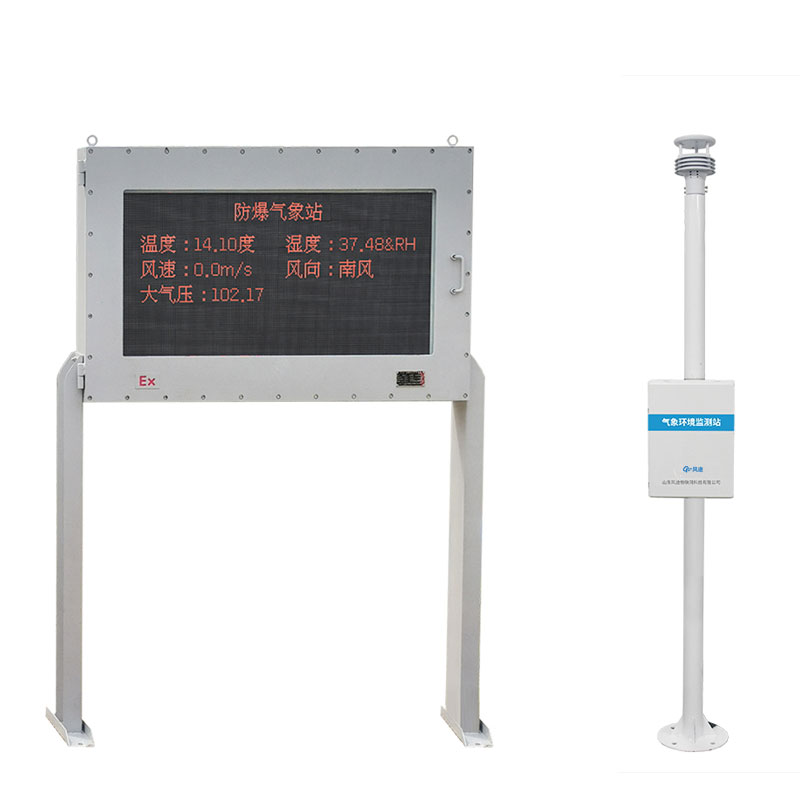
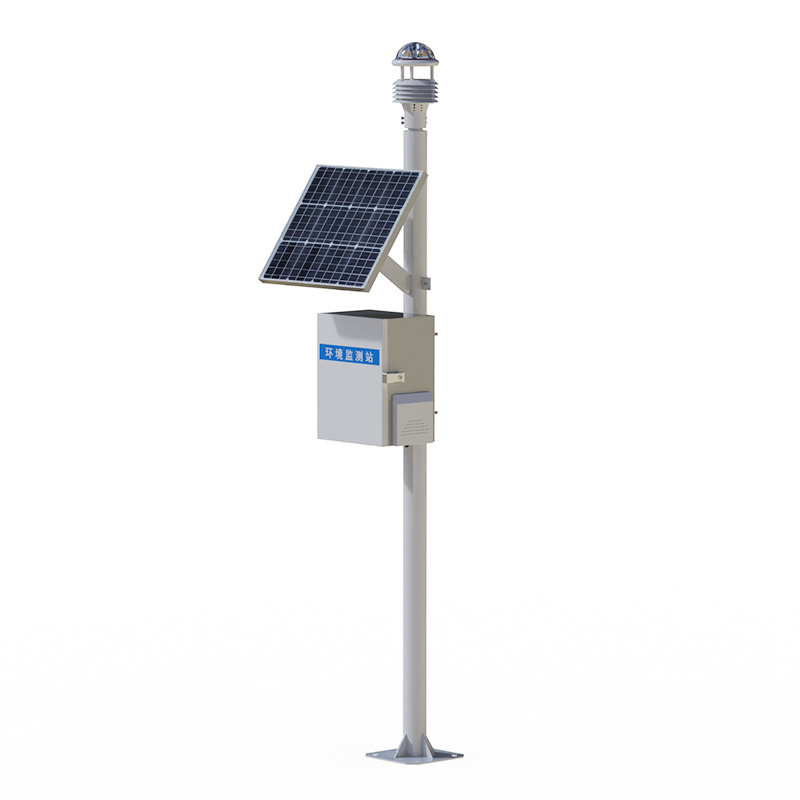
weather monitoring system is a highly integrated automatic meteorological observation device used to monitor key meteorological elements along railway lines in real time, such as wind speed, wind direction, temperature, humidity, air pressure, and optical rainfall. The device features a low-power design and a quick-installation structure, and is equipped with corrosion-resistant materials, enabling long-term stable operation in complex outdoor environments. It provides accurate meteorological data for railway scheduling and safety management.
Railway transportation safety is closely related to meteorological conditions. Strong winds can cause train instability, heavy rains can trigger landslides and ballast water accumulation, and low temperatures can affect track flexibility. Therefore, accurate meteorological monitoring is a crucial aspect of railway operation and maintenance. weather monitoring system is designed to address this need, providing a highly integrated technical solution to ensure railway traffic safety. The device uses a six-element integrated sensor to observe meteorological elements such as wind speed, wind direction, temperature, humidity, air pressure, and optical rainfall in real time, achieving continuous online monitoring of outdoor meteorological parameters 24 hours a day. All six parameters are output to the user simultaneously via a digital communication interface.
Deploying meteorological stations along railway lines presents numerous challenges. Railway lines often traverse rugged terrain with complex environments, some areas lacking power grid coverage, and the equipment must withstand harsh conditions such as wind, sand, rain, snow, and salt spray. To address these issues, weather monitoring system has made several design optimizations. The equipment employs a top-covered, concealed ultrasonic probe, effectively preventing interference from rain and snow accumulation and wind obstruction of monitoring data. The sensor housing is made of imported ASA material, offering outstanding resistance to salt spray and corrosion, achieving an IP65 protection rating or higher, capable of withstanding wind, sand, rain, and ultraviolet radiation along railway lines, ensuring long-term stable operation. The equipment comes standard with a two-meter carbon steel bracket, allowing for direct sensor mounting without a flange on the top, requiring only one person for on-site installation, significantly reducing deployment time.
Low power consumption is another key feature of weather monitoring system for adapting to field environments. The equipment supports solar power and can operate in dual modes of AC220V and DC 9-36V. The power management module automatically switches between AC and DC power supply modes based on power availability and is equipped with charge/discharge protection devices. The data upload interval is adjustable from 1 minute to 1000 minutes, allowing users to flexibly configure the transmission frequency according to actual monitoring needs. This design enables weather monitoring system to adapt to remote areas along railway lines without mains power, meeting the needs of long-term field monitoring.
In practical applications, weather monitoring system is widely deployed along high-speed railway lines, conventional railway sections, and bridge and tunnel entrances/exits, achieving grid-based meteorological monitoring across the entire line. When severe weather data such as excessive wind speeds or heavy rain are detected, the system can automatically trigger an early warning and push it to the dispatch center immediately, providing data support for emergency measures such as train speed limits, service stoppages, and line inspections. The equipment comes standard with GPRS transmission and can be equipped with 4G transparent transmission, LoRa transparent transmission, or other transmission schemes depending on the network conditions along the railway line, ensuring 24-hour real-time transmission of monitoring data to the railway operation and maintenance center.
Taking the Shenshuo Railway as an example, the railway management department has built 25 sets of multi-element automatic weather stations and 15 sets of atmospheric electric field meters along the line, achieving comprehensive monitoring of the weather along the line. This railway meteorological monitoring system collects data from all meteorological monitoring stations within a 50-100 kilometer radius, displays it in real time, and sets thresholds. It automatically alarms for elements exceeding the thresholds, effectively improving railway operational safety. weather monitoring system has become an indispensable infrastructure for ensuring railway transportation safety, providing solid support for the railway department's scientific scheduling and emergency management.
Sales Manager:Ms. Emily Wang
Tel, Whatsapp:+86 15898932201
Email:info@fengtutec.com
Add:No. 155 Optoelectronic Industry Accelerator, Gaoxin District, Weifang, Shandong, China