Meteorological environment monitoring equipment supplier
Insist on doing high-precision customer favorite technology products

Meteorological environment monitoring equipment supplier
Insist on doing high-precision customer favorite technology products

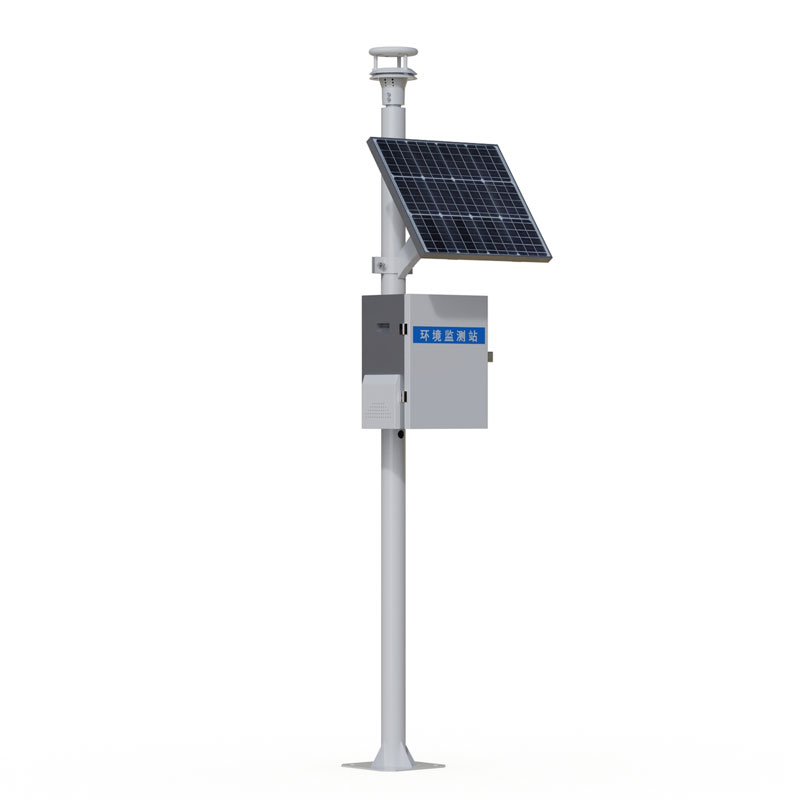
Wind speed monitoring system employs a two-parameter integrated ultrasonic sensor to provide real-time observations of wind speed and direction. It achieves this by emitting continuous, variable-frequency ultrasonic signals and measuring the resulting relative phase shifts. The device supports 24-hour continuous online monitoring and has already been successfully deployed in numerous wind power plants.
At the core of Wind speed monitoring system lies the ultrasonic wind speed and direction sensor. This type of sensor features a two-parameter integrated design, consolidating the measurement functions for both wind speed and direction into a single compact unit—thereby eliminating the need for traditional mechanical wind cups and wind vanes. The device operates based on the principle of phase difference measurement: the sensor emits continuous, variable-frequency ultrasonic signals and calculates real-time wind speed and direction values by measuring the relative phase shifts of the ultrasonic waves as they propagate in downwind and upwind directions. Compared to traditional mechanical anemometers, this measurement method eliminates errors caused by sensor startup delays, demodulation circuit delays, and temperature fluctuations; furthermore, it eliminates the wear-and-tear and maintenance requirements associated with mechanical rotating components.
Regarding data output, Wind speed monitoring system transmits both wind speed and direction parameters simultaneously to the user via an RS485 digital communication interface. It supports the MODBUS protocol, facilitating seamless integration into a wind farm's SCADA system or environmental monitoring platform. The device enables 24-hour continuous online monitoring of outdoor meteorological parameters; with its rapid response speed, it can capture high-frequency wind characteristics—such as sudden gusts—providing timely and accurate data support for wind turbine yaw control and power forecasting. In terms of environmental adaptability, the sensor housing is constructed from either ASA engineering plastic or stainless steel. Its top-mounted, concealed ultrasonic probe design prevents the accumulation of rain and snow while avoiding wind shielding effects caused by the sensor structure itself. With an ingress protection rating of IP65 or higher, the device is capable of stable, long-term operation in harsh environments characterized by strong winds, blowing sand and dust, low temperatures, and salt spray.
Currently, these two-parameter integrated wind speed and direction sensors—based on the principle of ultrasonic phase difference measurement—have been successfully deployed and are in active use across numerous wind power plants. For instance, in the retrofit project for its Lijialiang Wind Farm, SPIC replaced the mechanical anemometers and wind vanes on all 63 of its turbines with ultrasonic sensors to resolve issues involving mechanical component wear and operational downtime caused by rain, snow, and icing. Similarly, Goldwind Smart Energy collaborated with a wind farm in Northeast China to implement a retrofit program across all 86 of its turbines, replacing their original wind measurement devices with ultrasonic anemometers; following this upgrade, no subsequent turbine downtime was attributed to wind measurement device failures. Furthermore, international manufacturers such as Vaisala and Gill Instruments have introduced ultrasonic wind sensor products specifically designed for wind farms, thereby further validating the applicability of this technology within the wind power industry. Ultrasonic phase-difference wind measurement technology is rapidly emerging as the mainstream solution in the field of wind power generation monitoring.
Sales Manager:Ms. Emily Wang
Tel, Whatsapp:+86 15898932201
Email:info@fengtutec.com
Add:No. 155 Optoelectronic Industry Accelerator, Gaoxin District, Weifang, Shandong, China