Meteorological environment monitoring equipment supplier
Insist on doing high-precision customer favorite technology products

Meteorological environment monitoring equipment supplier
Insist on doing high-precision customer favorite technology products

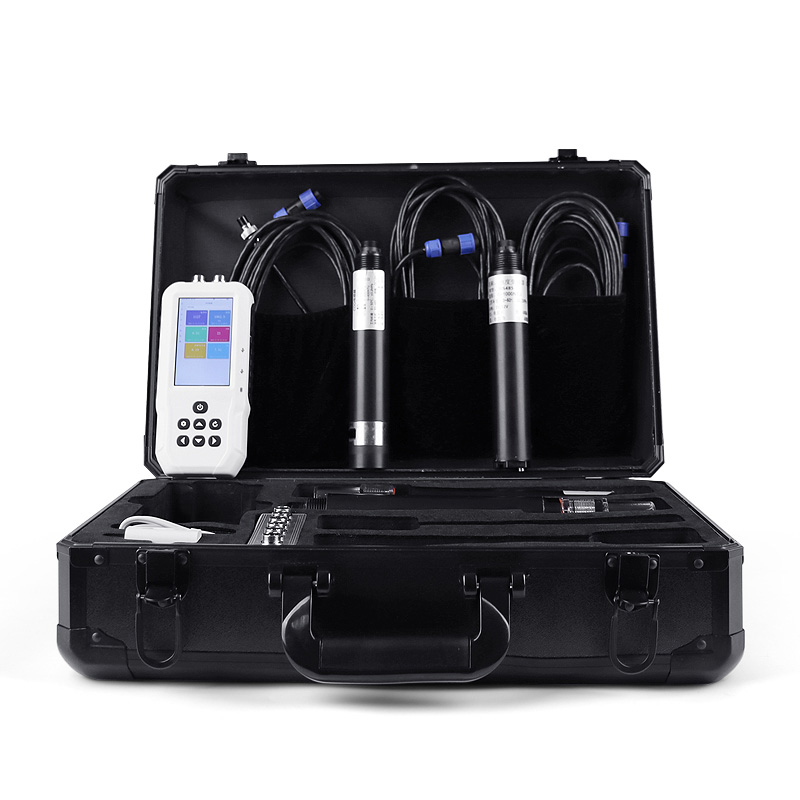
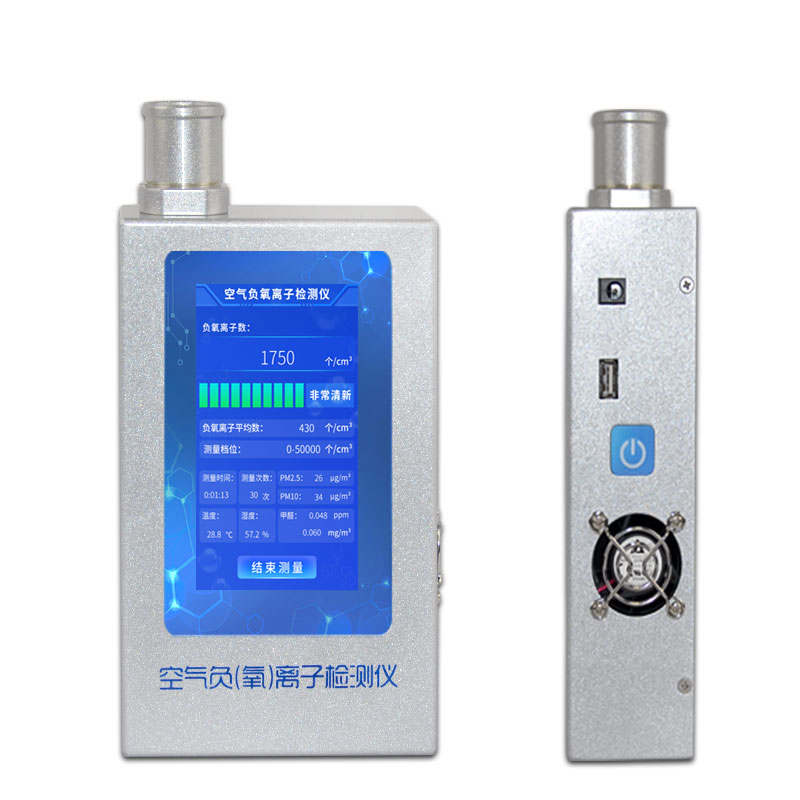
Negative ion tester is a professional device for measuring the concentration of negative ions in the air. It features accurate measurement, high sensitivity, and strong resistance to humidity, and is widely used in environmental monitoring and air quality assessment. It is a high-precision analytical instrument.
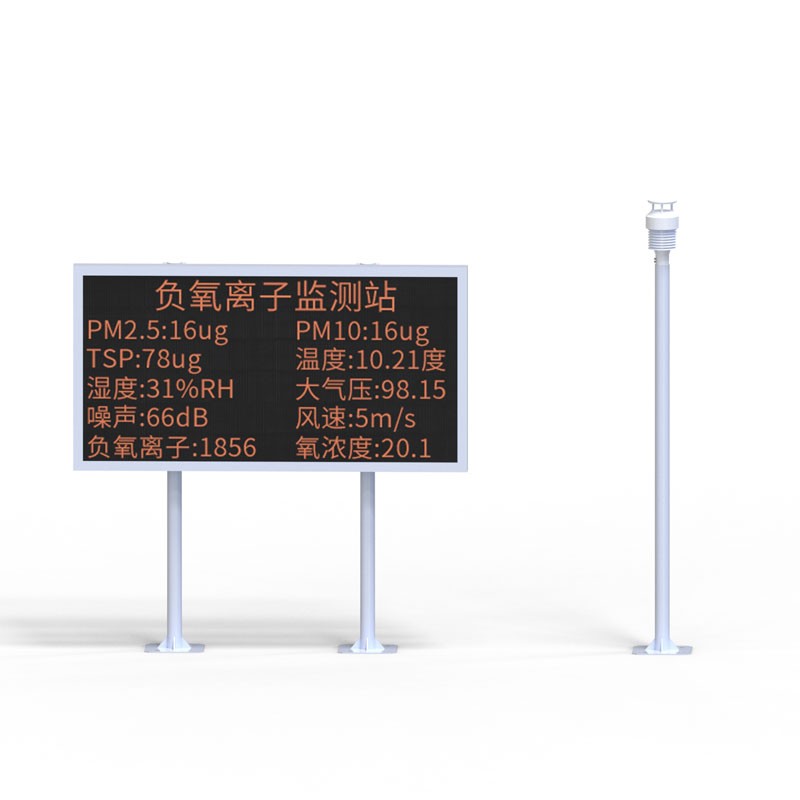
Negative ion tester is a professional instrument used to detect the concentration of negative oxygen ions in the air. Negative ions, or negatively charged air ions, are widely present in the natural environment, and their concentration is one of the important indicators for evaluating air quality and environmental health. Through real-time monitoring, this instrument provides objective data for environmental research, health assessment, and air quality management in specific locations.
The core function of this device is to measure the concentration of atmospheric negative oxygen ions in real time. Its working principle is usually based on the capacitive collection method or the parallel plate method. Air samples pass through the instrument's detection unit at a constant flow rate, where the negative ions are deflected under the action of an electric field, generating a weak current signal. A high-sensitivity microammeter inside the instrument detects this signal, and after precise circuit amplification and algorithm processing, the real-time negative ion concentration value is calculated and displayed digitally. The entire process is automated, ensuring the continuity and immediacy of the measurement.
Measurement accuracy and high sensitivity are key factors in evaluating the performance of Negative ion tester. High-performance instruments use advanced sensor technology and signal processing solutions to effectively capture and differentiate negative ions of different particle sizes, responding quickly to changes in concentration, with a minimum detection limit of a few ions per cubic centimeter. This allows it to be used not only for monitoring in high-concentration environments such as forests and waterfalls, but also to accurately reflect subtle changes in ordinary indoor environments.
Humidity resistance is crucial for ensuring the stable operation of the instrument in diverse environments. Especially in outdoor or high-humidity locations, water molecules in the air may interfere with measurements. High-quality Negative ion tester instruments employ special air path structures, sensor protection, and electronic component processing techniques to effectively resist the effects of humid environments, reduce measurement errors, and ensure the reliability of long-term monitoring data.
In terms of applications, Negative ion tester has a wide range of uses. In environmental monitoring, it is a scientific tool for assessing the ecological air quality of forest parks, wetlands, and tourist attractions, and the relevant data is often used as the basis for official reports on "air negative oxygen ion levels." In the field of air quality assessment, it can be used for quantitative evaluation of the effectiveness of fresh air systems and indoor air purification effects. Furthermore, it can provide crucial data support in healthcare facilities, building materials testing, scientific research, and related industrial production environment monitoring.
In summary, Negative ion tester, as a professional testing and analysis instrument, has become an indispensable technical device for objectively quantifying air negative ion concentration due to its precise measurement capabilities, high sensitivity, and excellent environmental adaptability. It provides a solid data foundation for improving living environments, protecting the ecological environment, and conducting relevant scientific research.
Sales Manager:Ms. Emily Wang
Tel, Whatsapp:+86 15898932201
Email:info@fengtutec.com
Add:No. 155 Optoelectronic Industry Accelerator, Gaoxin District, Weifang, Shandong, China