Meteorological environment monitoring equipment supplier
Insist on doing high-precision customer favorite technology products

Meteorological environment monitoring equipment supplier
Insist on doing high-precision customer favorite technology products

Meteorological monitoring system integrates five types of sensors—measuring wind speed, wind direction, temperature, humidity, and atmospheric pressure—into a single unit. Designed for rapid, calibration-free deployment, its low-power architecture makes it ideal for long-term, unattended operation in remote field environments. It is now widely utilized across various sectors, including meteorology, agriculture, environmental protection, marine science, aviation, port management, scientific research, and educational institutions.
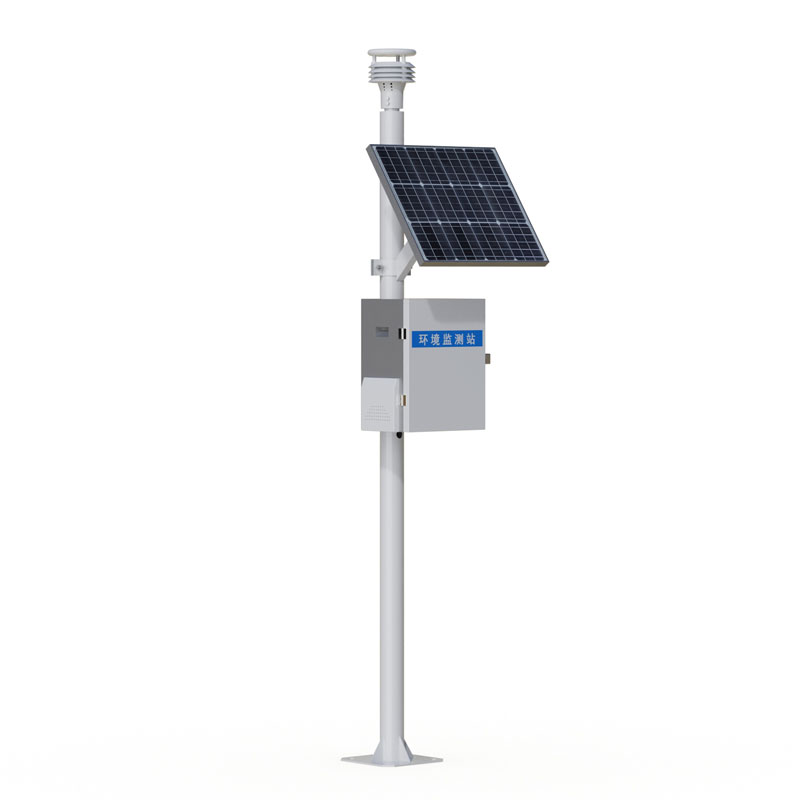
Meteorological monitoring system is a highly integrated, low-power, and high-precision automatic weather observation device designed for quick installation and convenient use in field monitoring applications. Requiring no on-site calibration, the device can be deployed rapidly and is extensively applied in fields such as meteorology, agriculture, forestry, environmental protection, marine science, aviation, port operations, scientific research, and campus education. By consolidating sensors for key meteorological parameters—including temperature, humidity, wind speed, wind direction, and atmospheric pressure—into a single, integrated five-element sensor unit, it creates a comprehensive, unattended weather monitoring system capable of data acquisition, storage, transmission, and management.
Traditional automatic weather stations require the separate installation of multiple sensors—such as anemometers, wind vanes, temperature/humidity shields, and barometers—resulting in a cumbersome installation process, complex wiring, and high maintenance costs. Meteorological monitoring system integrates all five sensors into a single, compact housing, allowing it to be put into operation immediately without the need for on-site calibration. Users simply need to mount the device onto a pole or bracket and connect the power supply; the device will then automatically begin collecting and transmitting data. This calibration-free design significantly lowers the barrier to installation, enabling even non-technical personnel to complete the deployment process within minutes.
Low power consumption is another key feature of Meteorological monitoring system. The device employs ultrasonic measurement technology to replace traditional mechanical wind speed and direction sensors; by eliminating moving parts, it significantly reduces friction loss and energy consumption. The total power consumption of the unit is typically maintained at a level of just a few tens of milliwatts. When paired with solar panels and backup batteries, it can achieve continuous, all-weather operation—making it particularly well-suited for long-term field monitoring in remote regions where access to grid power is limited.
In terms of data acquisition and transmission, Meteorological monitoring system features built-in modules for data collection, storage, and wireless transmission. The device automatically measures five types of meteorological parameters at a sampling frequency configured by the user. It stores this data in local memory while simultaneously uploading it to a cloud server or user terminal via wireless communication methods such as 4G, Wi-Fi, or LoRa. Users can access real-time data and historical records at any time via a computer or mobile phone, receive alerts regarding parameter thresholds, and remotely manage the monitoring site.
The application scenarios for the Meteorological monitoring system are extensive. In the agricultural sector, farmers can adjust irrigation and fertilization schedules based on real-time meteorological data to enhance crop yield and quality. In forestry and environmental protection, the device can be utilized for forest fire monitoring and air quality assessment. In marine and port environments, data on wind speed and direction is critical for the safe entry and exit of vessels, as well as for dockside operations. Scientific expedition teams can rapidly establish meteorological observation points in extreme environments, such as polar regions, deserts, and high-altitude mountains. Furthermore, campus weather stations provide students with a practical platform for learning about meteorology. As Internet of Things (IoT) technology continues to evolve, the Meteorological monitoring system is poised to play an increasingly vital role across an even wider range of fields.
Sales Manager:Ms. Emily Wang
Tel, Whatsapp:+86 15898932201
Email:info@fengtutec.com
Add:No. 155 Optoelectronic Industry Accelerator, Gaoxin District, Weifang, Shandong, China