Meteorological environment monitoring equipment supplier
Insist on doing high-precision customer favorite technology products

Meteorological environment monitoring equipment supplier
Insist on doing high-precision customer favorite technology products

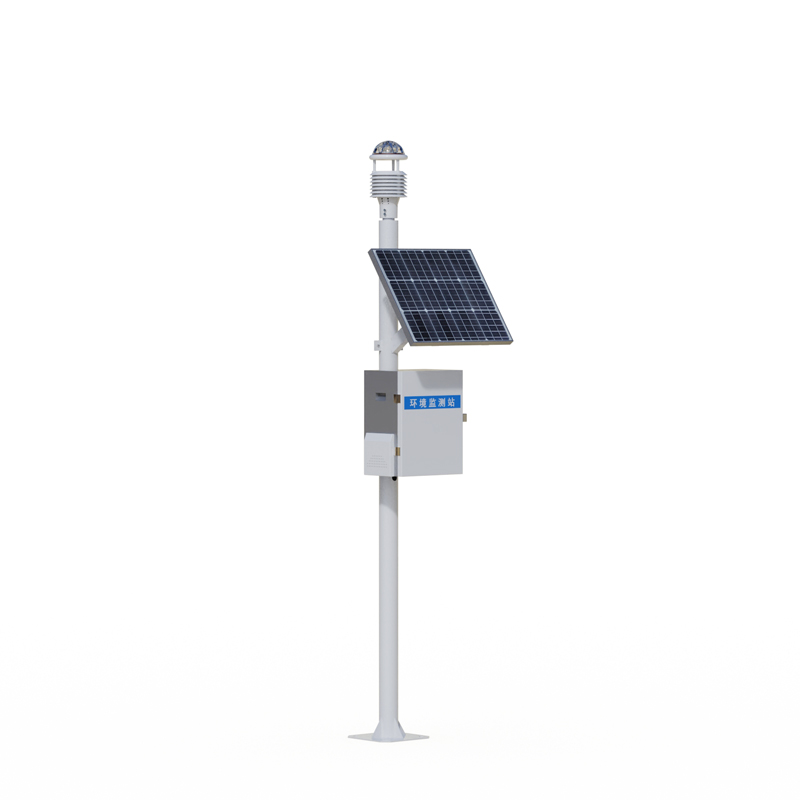
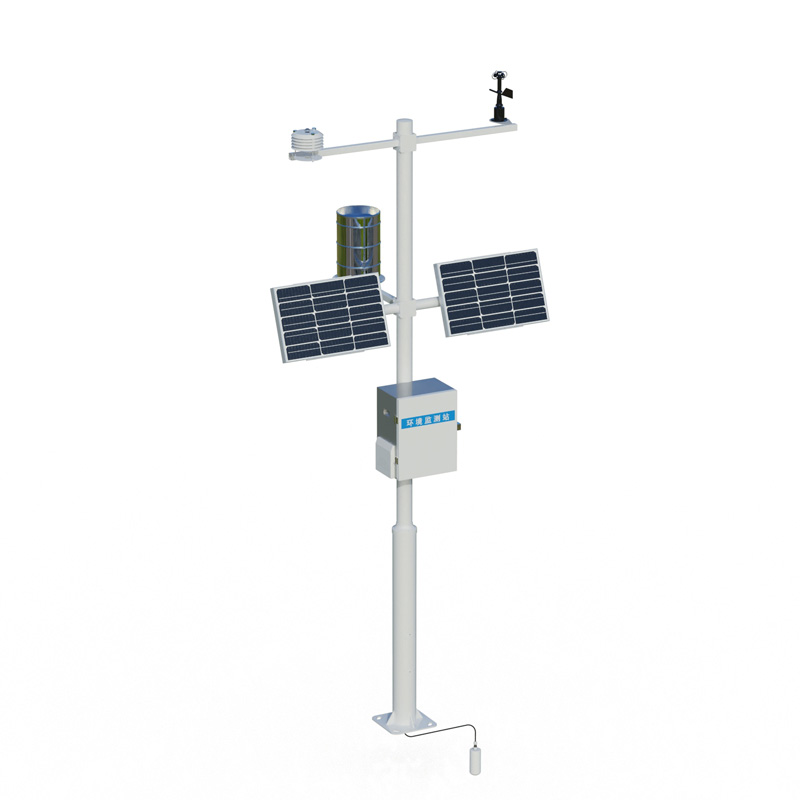
The integrated weather station can observe various meteorological and environmental elements in real time, including wind speed, wind direction, air temperature and humidity, and atmospheric pressure. It features a highly integrated design and strong weather resistance, making it widely applicable in agriculture, forestry, urban management, environmental monitoring, and other fields, adaptable to various practical application scenarios.
The integrated weather station is a device with multi-element real-time monitoring capabilities. It can comprehensively capture meteorological elements such as wind speed, wind direction, air temperature, humidity, atmospheric pressure, and optical rainfall, while accurately monitoring environmental indicators such as PM2.5, PM10, CO, SO2, NO2, and O3, achieving synchronous acquisition and real-time feedback of meteorological and environmental data. Its highly integrated design combines multiple monitoring functions into one simple structure, requiring no complex assembly, facilitating convenient deployment, and allowing for rapid use.
This equipment is extremely weather-resistant, using high-quality protective materials, and can adapt to different climatic conditions and complex environments. Whether in high temperatures, severe cold, heavy rain, or sandstorms, it can operate stably, ensuring the continuity and accuracy of data monitoring, requiring minimal maintenance, and reducing operating costs. This characteristic enables it to adapt to various scenarios and meet the monitoring needs of different fields.
In agriculture, integrated meteorological stations can monitor key elements such as temperature, humidity, and rainfall in farmland in real time, providing precise data support for farmers' irrigation, fertilization, and pest and disease control activities, thus contributing to the development of smart agriculture and improving agricultural production efficiency. In forestry, it can capture data such as wind speed and rainfall in real time, providing timely warnings of risks such as forest fires and pests, ensuring forest fire prevention and forestry resource protection.
In urban management, integrated meteorological stations can monitor urban air quality, temperature, humidity, and precipitation, providing data references for urban flood control, environmental governance, and municipal management, helping to improve the precision of urban management. In environmental monitoring, it can accurately monitor the concentration of various pollutants, providing a scientific basis for environmental quality assessment and pollution control, and promoting the continuous improvement of the ecological environment.
With its comprehensive monitoring capabilities, stable operating performance, and wide adaptability, integrated meteorological stations have become important equipment for meteorological and environmental monitoring work in various fields, providing reliable data support for scientific decision-making in related work and contributing to the high-quality development of various industries.

Sales Manager:Ms. Emily Wang
Tel, Whatsapp:+86 15898932201
Email:info@fengtutec.com
Add:No. 155 Optoelectronic Industry Accelerator, Gaoxin District, Weifang, Shandong, China