Meteorological environment monitoring equipment supplier
Insist on doing high-precision customer favorite technology products

Meteorological environment monitoring equipment supplier
Insist on doing high-precision customer favorite technology products

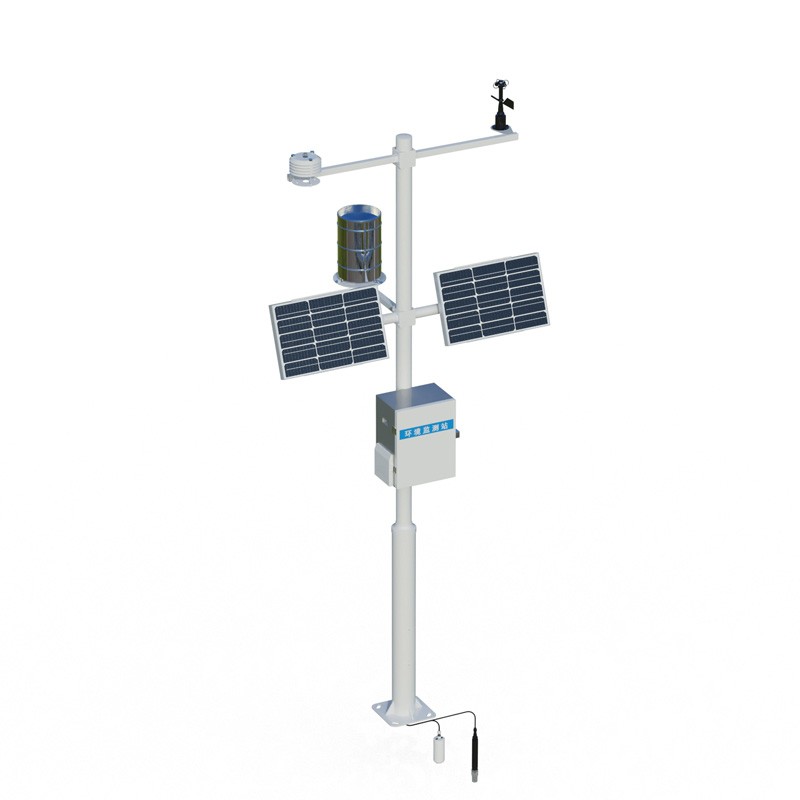
The meteorological monitoring system is a high-precision, low-power field observation instrument. It integrates various sensors and utilizes solar power to facilitate rapid deployment. By collecting data on temperature, humidity, soil conditions, wind, and precipitation, it provides essential raw observational data for weather forecasting and disaster monitoring.
Designed for long-term field monitoring, this highly integrated, low-power system allows for quick installation. It consists of five core components: meteorological sensors, a data logger, a solar power supply system, a mounting mast, and a cloud platform. The system comes pre-configured, enabling rapid on-site setup without the need for complex construction, making it highly adaptable to diverse field environments.
Equipped with a wide array of sensors, the system can simultaneously measure standard meteorological parameters—such as ambient temperature, relative humidity, atmospheric pressure, dew point, wind direction and speed, precipitation, solar radiation, and sunshine duration. It also incorporates soil sensors to monitor soil temperature and moisture, salinity, pH levels, NPK (nitrogen, phosphorus, and potassium) content, and soil evaporation. Additional sensors can be integrated to track environmental parameters such as CO2, PM2.5, PM10, CO, SO2, negative oxygen ions, and oxygen levels, addressing multi-dimensional monitoring needs across meteorological, soil, and atmospheric domains. All measurements offer consistent resolution and accuracy, meeting the data quality standards required for long-term, continuous observation.
Powered by solar energy, the system eliminates the need for grid-based electrical wiring, thereby reducing infrastructure costs in remote field locations. A data logger aggregates information from all sensors in real time and transmits it to a cloud platform for storage and viewing. This allows personnel to access monitoring data remotely, minimizing the need for frequent on-site inspections. The system is versatile and well-suited for a wide range of applications, including use by meteorological agencies, agricultural operations, forest reserves, and scientific field research projects.
When deployed in the field, the meteorological monitoring system provides a continuous stream of stable, reliable data, serving as a scientific foundation for daily weather forecasting, the monitoring of severe weather events, and long-term climate research. Leveraging long-term observational data, personnel can discern regional meteorological patterns, identify precursors to hazardous weather—such as heavy rainfall or high winds—and support the analysis of climate trends. The equipment’s ease of installation and low power consumption enable users to establish a grid of meteorological observation stations in remote areas lacking a power supply, thereby expanding the data sources for ground-based weather monitoring networks.
Sales Manager:Ms. Emily Wang
Tel, Whatsapp:+86 15898932201
Email:info@fengtutec.com
Add:No. 155 Optoelectronic Industry Accelerator, Gaoxin District, Weifang, Shandong, China