Meteorological environment monitoring equipment supplier
Insist on doing high-precision customer favorite technology products

Meteorological environment monitoring equipment supplier
Insist on doing high-precision customer favorite technology products

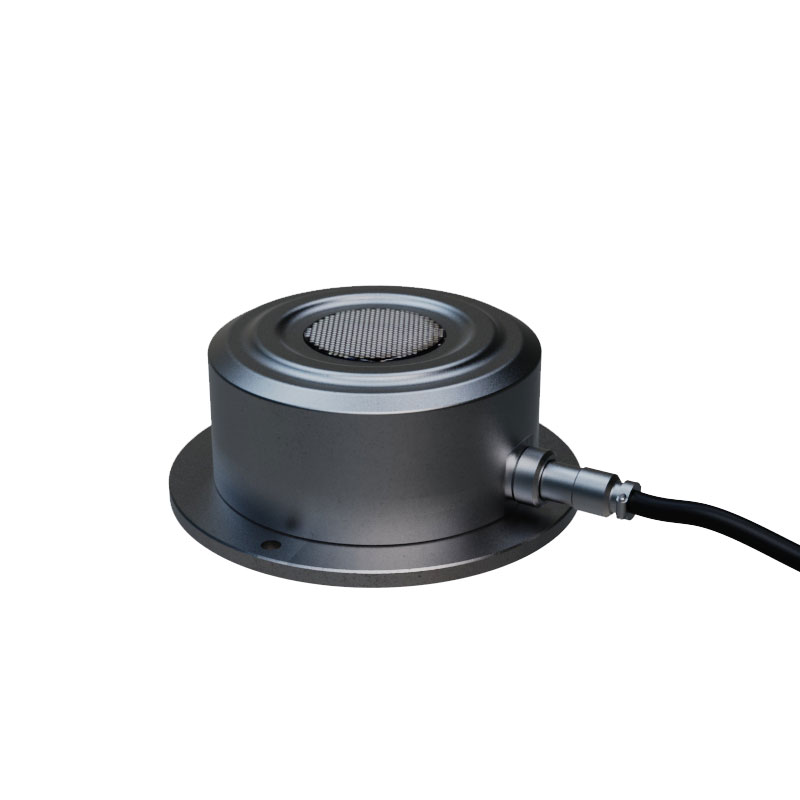
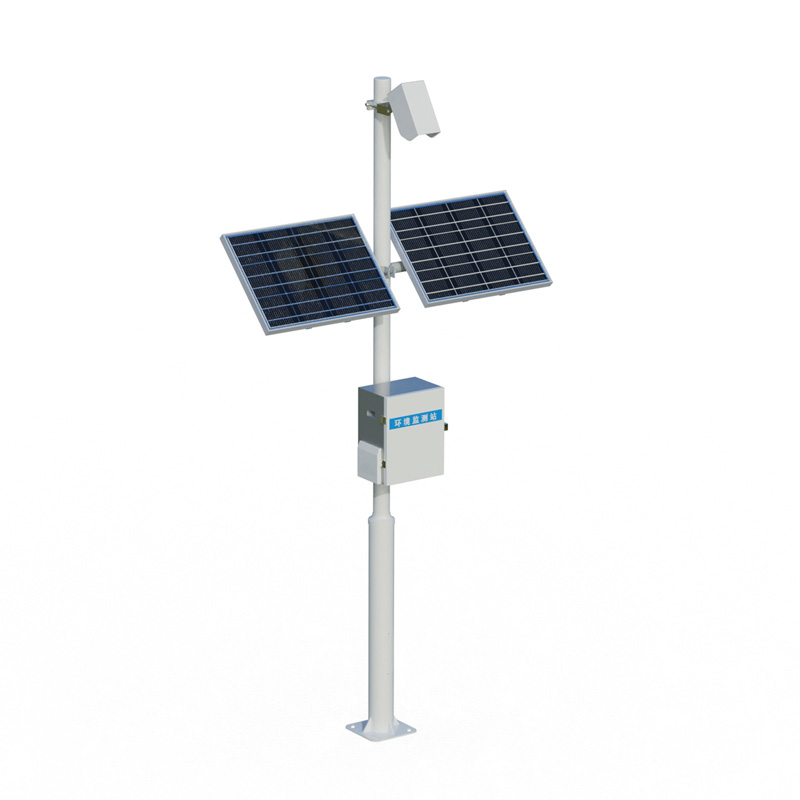
Utilizing remote sensing technology, the Road Surface Monitoring device detects the depth of standing water, ice, and snow from a distance of up to 15 meters—all without requiring pavement cutting or lane closures. Featuring corrosion-resistant properties, its non-embedded installation method avoids traffic disruption, providing road management authorities with accurate, real-time data on road surface conditions.
Traditional road weather stations often require pavement cutting or lane closures during installation. This process not only compromises the structural integrity of the road but also disrupts normal traffic flow during construction, thereby increasing management costs and safety risks. The Road Surface Monitoring resolves this challenge; its non-embedded design allows for the entire installation process to be completed externally—without making contact with the road surface structure, closing lanes, or performing any excavation work.
Based on infrared multispectral measurement technology, the Road Surface Monitoring accurately identifies road surface conditions by emitting specific infrared wavelengths onto the pavement and analyzing the resulting reflected spectrum. The device operates remotely with a maximum monitoring range of 15 meters; its detection footprint covers a circular area approximately 23 centimeters in diameter, effectively monitoring the core zone of a single traffic lane. In practical applications, it precisely measures the depth of standing water, ice, and snow, covering a measurement range of 0 to 10 millimeters with a resolution of 0.01 millimeters. Additionally, the device outputs a road surface slipperiness coefficient, enabling management authorities to quantitatively assess driving risks.
The corrosion-resistant design of the Road Surface Monitoring ensures its suitability for continuous, all-weather outdoor operation. It functions reliably within a temperature range of -40°C to 70°C and tolerates humidity levels from 0% to 100%, maintaining stable performance even in regions prone to heavy rain and snow, or in corrosive environments such as bridge decks. Furthermore, the device features an integrated lens contamination detection function that automatically monitors the cleanliness level of the optical lens and applies necessary compensations, thereby reducing the frequency of manual maintenance and extending the device's uninterrupted operational lifespan. This remote-sensing design not only circumvents the issue of embedded sensors being susceptible to damage from vehicular traffic, but also allows for flexible installation on existing weather station poles, roadside structures, or bridge frameworks—functioning effectively provided there is an unobstructed line of sight.
From a data application perspective, the Road Surface Monitoring provides traffic management authorities with real-time data to support decision-making. Utilizing RS485 or RS232 communication interfaces, the device can transmit road surface condition reports (indicating dry, damp, wet, snowy, icy, or slushy states), along with various thickness measurements, to a cloud platform or monitoring center. Prior to the onset of adverse weather, the system issues timely warnings, alerting management personnel to implement measures such as salt spreading for de-icing, lane closures, or the issuance of speed restrictions; this effectively reduces the probability of traffic accidents caused by icy or snow-covered road surfaces. Statistics indicate that among traffic accidents caused by adverse weather, those resulting from road icing and snow accumulation account for approximately 30%; consequently, enhancing road surface condition monitoring is of paramount importance for improving overall road safety levels.
Overall, the Road Surface Monitoring system—based on remote-sensing technology—achieves precise, long-range measurement of road surface water, ice, and snow conditions through a non-contact detection method, thereby avoiding the road damage and traffic disruption typically associated with traditional installation methods. Its corrosion-resistant, easy-to-install, and maintenance-free characteristics make it an ideal choice for road surface monitoring at critical locations, such as highways, bridge decks, tunnel entrances and exits, and accident-prone road sections.
Sales Manager:Ms. Emily Wang
Tel, Whatsapp:+86 15898932201
Email:info@fengtutec.com
Add:No. 155 Optoelectronic Industry Accelerator, Gaoxin District, Weifang, Shandong, China