Meteorological environment monitoring equipment supplier
Insist on doing high-precision customer favorite technology products

Meteorological environment monitoring equipment supplier
Insist on doing high-precision customer favorite technology products

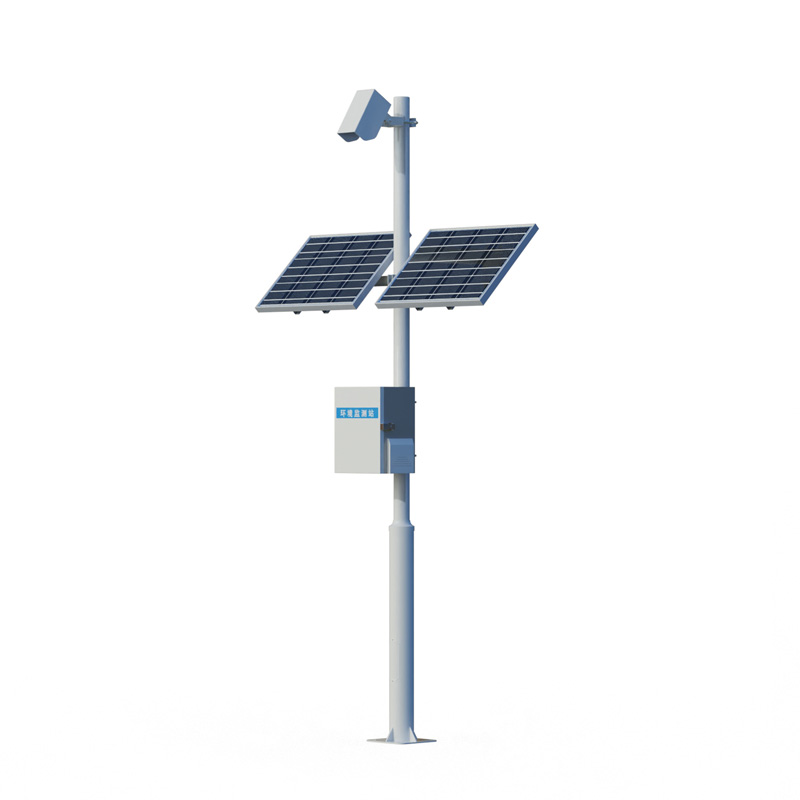
Employing spectral analysis technology, the Road Surface Condition supports non-contact infrared remote sensing measurements at distances of up to 15 meters. The device can be mounted on weather stations or buildings, eliminating the need to excavate roads or close traffic lanes. Its corrosion-resistant design facilitates easy maintenance, while it precisely outputs data regarding the thickness of standing water, ice, and snow, as well as the degree of road slipperiness.
The Road Surface Condition achieves non-contact measurement based on the principles of spectral analysis. The device emits an infrared beam onto the road surface; by analyzing the distinct spectral reflection characteristics of various substances, it differentiates between dry pavement, standing water, ice layers, and accumulated snow, and calculates the respective thickness of each. The entire measurement process is conducted remotely, with a maximum detection range of 15 meters. This eliminates the need to embed sensors within the road surface—thereby avoiding structural damage to the roadway—and eliminates the traffic disruptions typically associated with the construction work required for traditional detection methods.
Featuring a non-embedded design, the detector's main unit can be mounted on the existing support structures of weather stations or affixed to the exterior walls of other buildings that offer an unobstructed view of the road surface. Installation does not require lane closures; a single mounting procedure ensures long-term, continuous operation. The device's housing is constructed from corrosion-resistant materials, ensuring stable performance in environments exposed to rain, snow, humidity, or road de-icing agents, thereby reducing maintenance frequency.
In terms of functionality, the Road Surface Condition accurately outputs data on the thickness of standing water, ice layers, and accumulated snow on the road surface, while also comprehensively calculating the degree of road slipperiness. This data provides a solid basis for decision-making by road maintenance authorities—for instance, enabling the proactive application of anti-skid materials prior to freezing conditions, or triggering drainage systems when water accumulation reaches a specific threshold. For winter snow removal operations, the device provides real-time feedback on changes in snow thickness, aiding in the efficient dispatch of snow-removal vehicles and the precise allocation of de-icing agents to prevent resource waste.
Leveraging remote sensing technology, the detector remains unaffected by passing vehicular traffic, allowing for continuous monitoring of changes in road surface conditions. The infrared detection system maintains stable operation even at night or under adverse weather conditions. The device's output interface is compatible with standard meteorological monitoring systems, allowing data to be directly integrated into traffic management platforms to facilitate automated early warning alerts. From installation through to daily operation, Road Surface Condition consistently demonstrates its capacity to enhance road management efficiency. Characterized by its ability to be installed without damaging the road surface, disrupting traffic, or requiring frequent maintenance, the device is ideally suited for sections of road prone to surface-related hazards—including expressways, bridges, tunnel entrances, and mountainous routes. By precisely measuring the depth of ice, snow, and standing water, the device enables management authorities to shift from a reactive approach to proactive prevention, thereby reducing the incidence of traffic accidents and ensuring road safety.
Sales Manager:Ms. Emily Wang
Tel, Whatsapp:+86 15898932201
Email:info@fengtutec.com
Add:No. 155 Optoelectronic Industry Accelerator, Gaoxin District, Weifang, Shandong, China