Meteorological environment monitoring equipment supplier
Insist on doing high-precision customer favorite technology products

Meteorological environment monitoring equipment supplier
Insist on doing high-precision customer favorite technology products

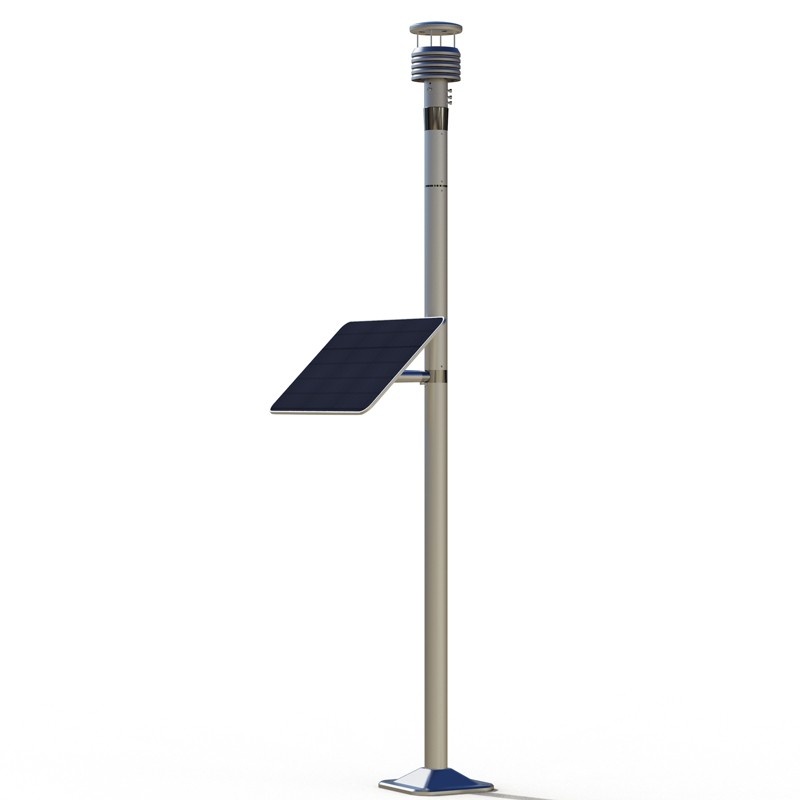
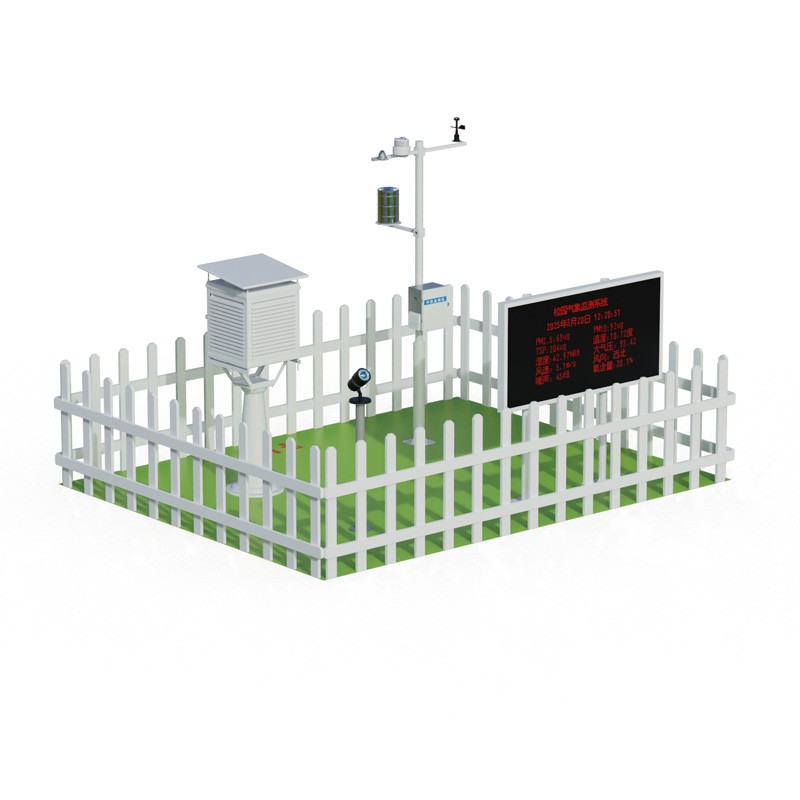
The campus weather station integrates a complete set of observation accessories, relies on mains power, supports GPRS data transmission, and monitors air pressure, wind speed, and wind direction in real time. It displays observation data on a large screen, making it suitable for practical teaching on campus.
The campus weather station is a research-grade monitoring device developed for teachers and students. Its highly integrated structure results in low power consumption and a simple assembly process, allowing for rapid deployment and installation in open areas on campus. It is suitable for daily natural science teaching. The complete system includes various basic hardware components, such as meteorological sensors, pole supports, protective equipment boxes, a 2m x 1m LED display screen, a data logger, an online cloud platform, a fiberglass Stevenson screen with built-in wet and dry bulb thermometers, a solar meter, and a safety fence. This comprehensive hardware supports both manual observation and automated data acquisition.
The campus weather station primarily uses municipal power, ensuring uninterrupted operation around the clock. Data is transmitted wirelessly via GPRS by default, but schools can add wired transmission accessories to expand data transmission paths based on their network conditions. Sensors capture real-time atmospheric pressure, wind speed, wind direction, and other basic meteorological elements within the campus area. After the data acquisition unit processes and collects the monitoring signals, the information is displayed on an outdoor LED screen for students and faculty to easily access real-time meteorological parameters. Simultaneously, all observation records are uploaded to a cloud platform for storage.
With the campus weather station in place, instructors can organize hands-on courses using the hardware. Students can familiarize themselves with the working principles of various meteorological instruments, manually examine the structure of Stevenson screens and solar meters, regularly organize long-term meteorological data on the platform, and complete observation and recording assignments. The fence prevents students from directly touching the delicate sensor components, reducing the risk of damage from accidental bumps. The entire system balances instrument observation accuracy, outdoor durability, and the practical needs of campus science education, becoming a permanent facility for natural science practice on campus.
Sales Manager:Ms. Emily Wang
Tel, Whatsapp:+86 15898932201
Email:info@fengtutec.com
Add:No. 155 Optoelectronic Industry Accelerator, Gaoxin District, Weifang, Shandong, China