Meteorological environment monitoring equipment supplier
Insist on doing high-precision customer favorite technology products

Meteorological environment monitoring equipment supplier
Insist on doing high-precision customer favorite technology products

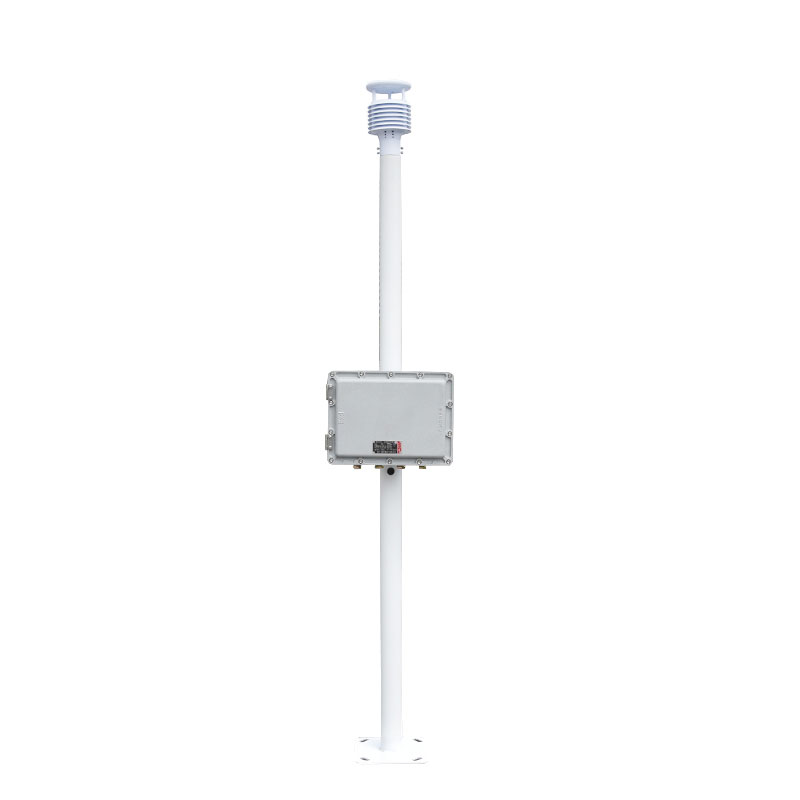
Weather Station Data Logger is specifically developed for flammable and explosive environments such as chemical plants and oil depots. It features a high-protection design incorporating corrosion resistance, explosion proofing, waterproofing, shock resistance, and dustproofing. It integrates sensors for five key parameters: wind speed, wind direction, temperature, humidity, and atmospheric pressure, making it suitable for real-time monitoring in hazardous environments such as petrochemical plants, coal mines, gas stations, and hazardous chemical storage facilities.
Weather Station Data Logger is an integrated meteorological monitoring device developed and manufactured for special locations such as chemical plants and oil depots. Its core design philosophy is based on a high level of protection, encompassing multiple safety features including corrosion resistance, explosion proofing, waterproofing, shock resistance, and dustproofing. This device is specifically designed for hazardous operating environments that are flammable, explosive, and corrosive. Through an integrated structure, it combines sensors for wind speed, wind direction, air temperature, humidity, and atmospheric pressure, enabling real-time collection and analysis of key meteorological parameters. In high-risk environments such as petrochemical plants, coal mining, gas stations, and hazardous chemical storage facilities, meteorological factors are often directly related to the risk of safety accidents. The deployment of Weather Station Data Logger can effectively improve overall safety levels.
The device's high-protection design is based on strict industrial standards. The explosion-proof performance ensures that electrical sparks do not trigger accidents in potentially explosive environments. The corrosion-resistant treatment uses special materials to resist chemical corrosion. The waterproof and dustproof construction adapts to harsh outdoor weather conditions, and the shock resistance reduces the risk of damage to the equipment in vibrating environments. These features collectively guarantee the stable operation and data reliability of the meteorological station under extreme conditions. The integrated sensor simplifies the installation process, reduces maintenance costs, and improves monitoring efficiency. Wind speed and wind direction data help assess the diffusion path of harmful gases or dust, air temperature and humidity parameters can warn of accelerated chemical reactions or equipment overheating, and changes in atmospheric pressure are related to gas leakage or accumulation phenomena. This real-time information provides a scientific basis for safety management decisions.
In specific application scenarios, Weather Station Data Logger plays a crucial role. Chemical plants rely on its monitoring of meteorological changes to adjust production processes and emergency responses. Oil depots utilize wind direction data to optimize oil and gas volatilization control measures. Coal mines use atmospheric pressure monitoring to warn of gas accumulation risks. Gas stations and hazardous chemical storage facilities use temperature and humidity data to prevent fires and explosions. These high-risk environments are often complex, and traditional meteorological equipment struggles to meet safety requirements. Weather Station Data Logger, with its specialized design, fills this gap. Its installation typically follows relevant safety regulations, ensuring compatibility with surrounding facilities, and sensors are regularly calibrated to maintain data accuracy.
From a technical perspective, Weather Station Data Logger utilizes durable materials and sealing processes, and its sensors are calibrated and tested to ensure long-term accuracy. The equipment usually complies with international explosion-proof certification standards, such as ATEX or IECEx, making it suitable for various hazardous areas worldwide. In practical operation, users can obtain real-time data through a remote monitoring system and integrate it into factory automation platforms to achieve early warning and automatic control functions. This integrated design not only reduces manual intervention but also improves response speed and reduces the risk of human error.
With increasingly stringent industrial safety regulations, the application scope of Weather Station Data Logger is gradually expanding. It is not only used in fixed locations but can also be adapted to mobile facilities or temporary work sites, providing flexible monitoring solutions for high-risk activities. In the future, technological advancements may further optimize sensor sensitivity and equipment durability, but the current version is sufficient to meet the needs of most hazardous environments. In short, Weather Station Data Logger, through its high protection level and integrated sensor design, provides a reliable meteorological monitoring tool for high-risk industries, helping to prevent accidents, protect personnel safety, and reduce property losses. It is an indispensable safety equipment in modern chemical, energy, and mining industries.
Sales Manager:Ms. Emily Wang
Tel, Whatsapp:+86 15898932201
Email:info@fengtutec.com
Add:No. 155 Optoelectronic Industry Accelerator, Gaoxin District, Weifang, Shandong, China