Meteorological environment monitoring equipment supplier
Insist on doing high-precision customer favorite technology products

Meteorological environment monitoring equipment supplier
Insist on doing high-precision customer favorite technology products

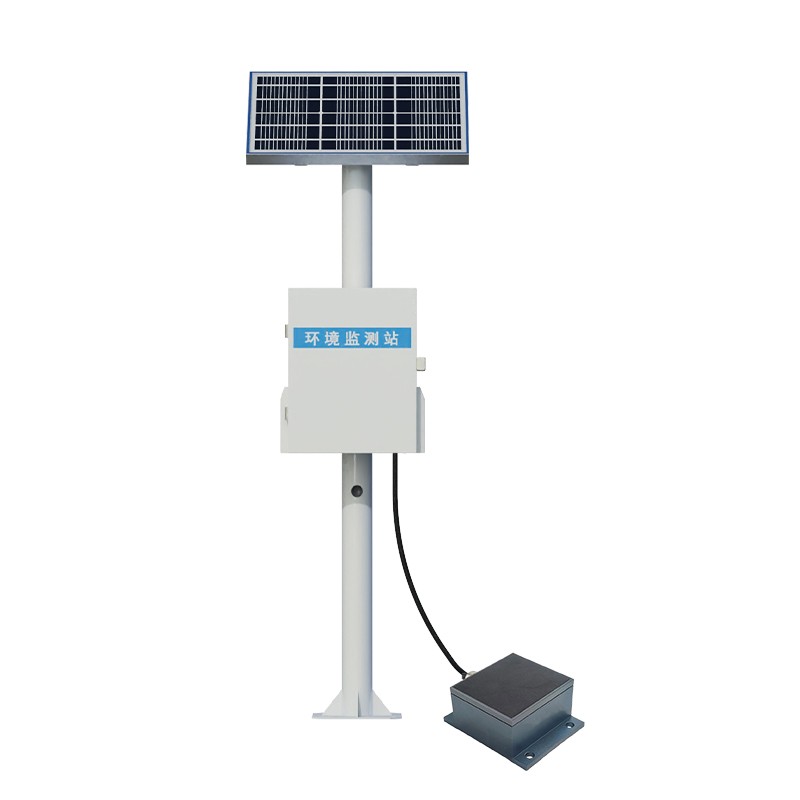
Geophone Monitoring Station Product Overview
Geophone Monitoring Station by capturing ground-borne acoustic (vibration) signals and collecting micro-seismic data, the device employs integrated early-warning algorithms to monitor and provide alerts for landslides and debris flows.Geophone Monitoring Station is an automated, field-deployable monitoring system designed to detect geological hazards—such as landslides and debris flows—or seismic activity by capturing geo-acoustic signals to provide early warnings. It is primarily used to measure various characteristics of geo-acoustic waves, including raw sound pressure, effective sound pressure, frequency, and raw waveform data. The device incorporates a 32-bit high-performance embedded microprocessor, enabling signal processing, data storage, analysis, and compensation. It features high resistance to interference, ultra-low power consumption, and a high level of system integration.
Geophone Monitoring Station Monitoring System Architecture
Geophone Monitoring Station primarily consists of a ground-acoustic signal sensor, a solar power supply system, a core monitoring unit, a communication system, and a mounting pole/stand.
Geophone Monitoring Station Product Applications
Geological Hazard Early Warning: Monitoring rock landslides and the collapse of unstable rock masses by collecting micro-seismic signals to detect precursors of internal rock fracturing.
Debris Flow Channels: Collecting ground vibration signals to provide early warning of incoming debris flows.
Seismological Research and Observation: Studying geo-acoustic signals and pre-seismic infrasound signals along fault zones.
Safety Monitoring and Early Warning: Assessing the stability of tailings dams, mine slopes, and the surrounding rock of tunnels.
Geophone Monitoring Station Technical Specifications
Dynamic Range: 0–120 Pa (no range switching required)
Resolution: 0.001 Pa
Accuracy: 0.1 Pa
Frequency Accuracy: 1 Hz (default) or 0.25 Hz (optional)
Frequency Measurement Range: 0.2–64 Hz
Frequency Measurement Resolution: 0.25 Hz
Sampling Rate: 256 Hz
Supply Voltage: 6–24 V DC
Power Consumption: ≤8 mA @ 12 V DC
Communication Interface: RS485
Communication Protocol: MODBUS
Dimensions: 82 × 64 × 37 mm
Material: Aluminum alloy
Operating Temperature: -30 to +75°C
Ingress Protection (IP) Rating: IP68
Sales Manager:Ms. Emily Wang
Tel, Whatsapp:+86 15898932201
Email:info@fengtutec.com
Add:No. 155 Optoelectronic Industry Accelerator, Gaoxin District, Weifang, Shandong, China












 Get a Free Quote