Meteorological environment monitoring equipment supplier
Insist on doing high-precision customer favorite technology products

Meteorological environment monitoring equipment supplier
Insist on doing high-precision customer favorite technology products

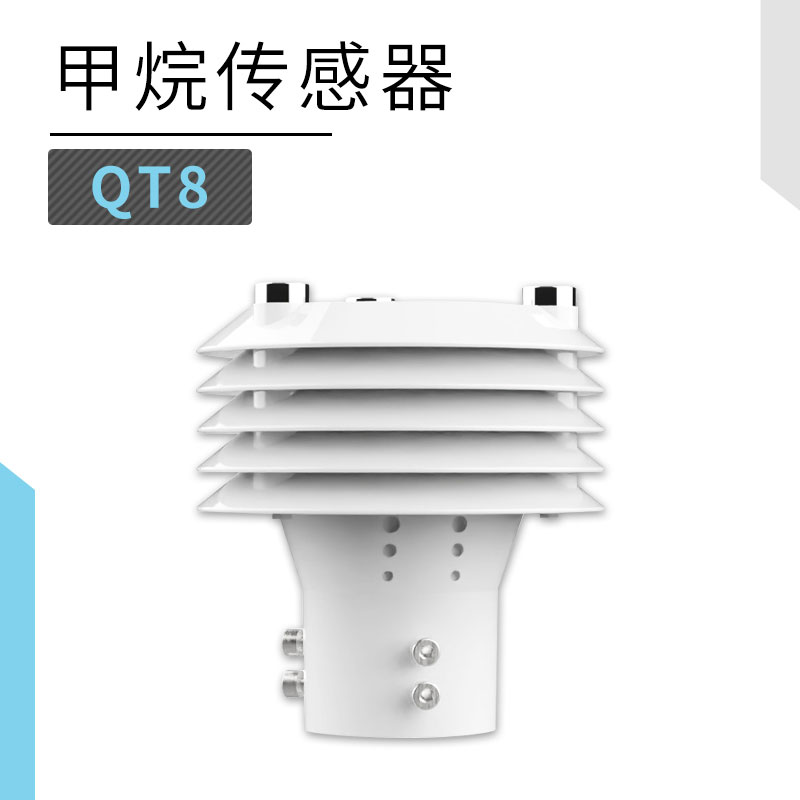
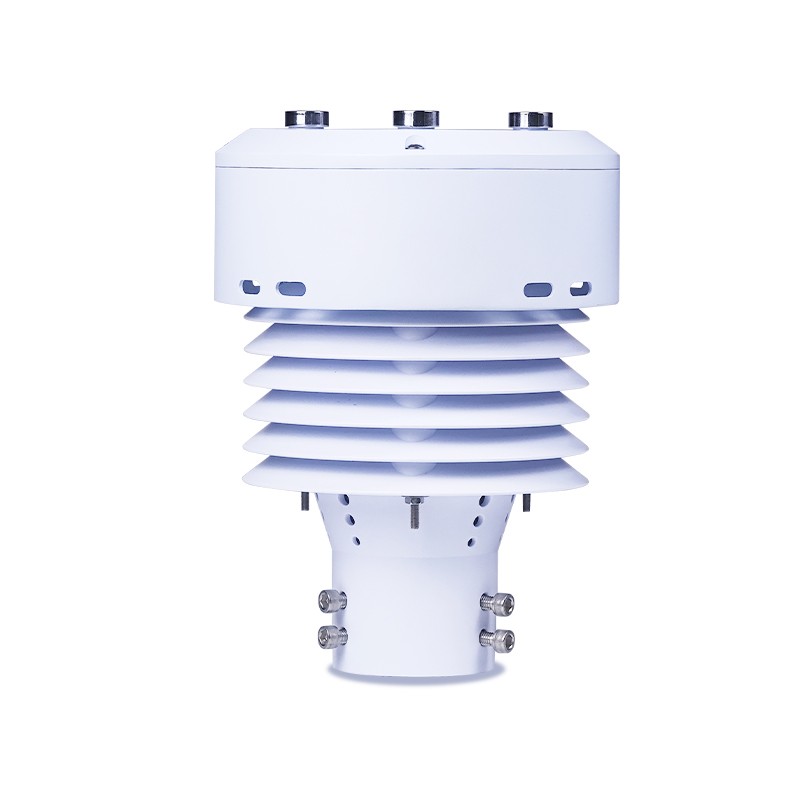
The negative ion sensor adopts a highly integrated structural design, integrating five monitoring functions: negative oxygen ions, temperature and humidity, PM2.5, and PM10. Based on professional measurement principles, it ensures detection accuracy and can achieve continuous 24-hour outdoor monitoring. All monitoring parameters are output uniformly through a digital interface, adapting to environmental monitoring in various fields.
The negative ion sensor is a highly integrated environmental monitoring device that breaks through the functional limitations of traditional single environmental detection devices. It integrates multiple core meteorological and air quality monitoring functions into one unit, adapting to various routine indoor and outdoor environmental monitoring needs. The device abandons the decentralized monitoring structure, simplifying the hardware architecture through an integrated design, improving operational stability, and enabling long-term adaptation to complex outdoor conditions, achieving uninterrupted online data acquisition around the clock.
The negative ion sensor is based on standardized professional detection principles, ensuring stable and reliable accuracy of all monitoring parameters. Air temperature is detected using the diode junction voltage method, covering a temperature range of -40℃ to 80℃, with an accuracy error controlled within ±0.3℃ and a resolution of up to 0.01℃. The air humidity sensor employs capacitive sensing technology, accurately collecting humidity data within the 0-100% RH range with a detection accuracy of ±3% RH. PM2.5 and PM10 parameters are measured using light scattering principles, with a detection range of 0-1000 ug/m³, an accuracy error of ±10%, and a resolution of 1 ug/m³. Negative oxygen ion detection utilizes a cylindrical electrode suction principle, covering a range of 0-100,000 ions/cm³ with a resolution of 1 ion/cm³, meeting the needs of high-precision ecological monitoring.
The negative ion sensor boasts efficient data transmission capabilities. Through a standardized digital communication interface, it can simultaneously output five monitoring parameters, simplifying data collection and aggregation processes and improving environmental monitoring efficiency. Its stable 24-hour continuous operation capability allows for long-term data collection without manual intervention, effectively reducing monitoring manpower and equipment deployment costs. With its superior performance, this negative ion sensor is widely used in various fields such as forestry ecological monitoring, environmental protection and management, meteorological data collection, cultural and tourism scenic spot monitoring, urban planning and surveying, and indoor air quality testing. It provides accurate, continuous, and reliable raw data support for various environmental quality assessments and ecological data analysis, and is a core basic device of the modern intelligent environmental monitoring system.
Sales Manager:Ms. Emily Wang
Tel, Whatsapp:+86 15898932201
Email:info@fengtutec.com
Add:No. 155 Optoelectronic Industry Accelerator, Gaoxin District, Weifang, Shandong, China