Meteorological environment monitoring equipment supplier
Insist on doing high-precision customer favorite technology products

Meteorological environment monitoring equipment supplier
Insist on doing high-precision customer favorite technology products

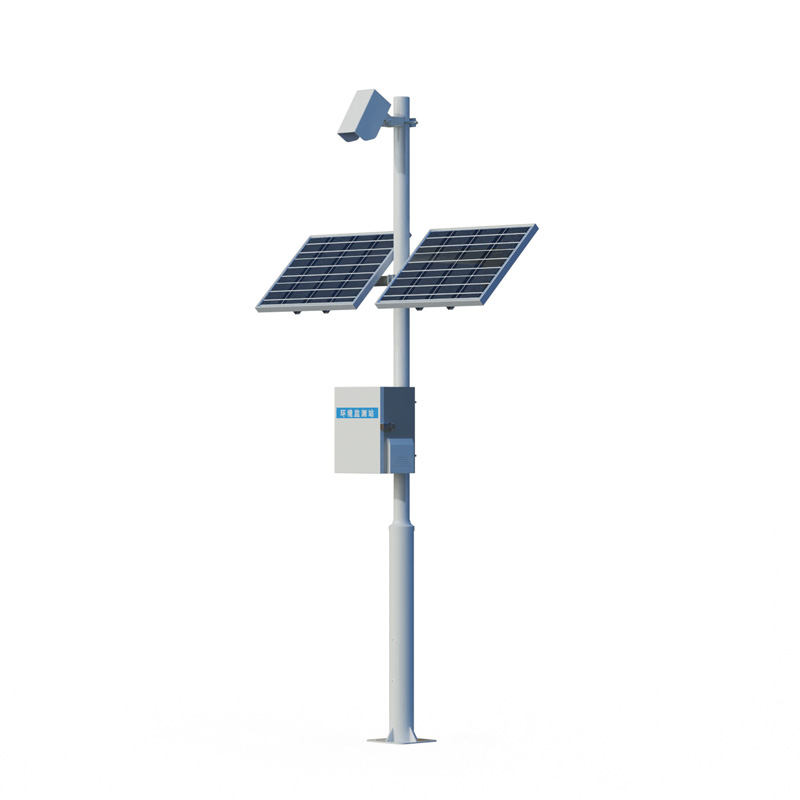
Road Surface Condition employs multi-band near-infrared laser remote sensing technology to non-contact, real-time identify the dry, wet, water, ice, and snow conditions of road surfaces by analyzing the differences in absorption rates of different media at specific wavelengths. It accurately measures water depth, ice thickness, and slipperiness, making it suitable for road safety monitoring in winter and harsh weather conditions.
Road Surface Condition is a professional monitoring device based on advanced optical remote sensing technology. Its core function is the accurate and real-time non-contact identification and measurement of road surface conditions. This device primarily serves areas such as highway traffic safety management, smart city infrastructure maintenance, and winter road emergency response, aiming to enhance road safety early warning capabilities.
The detector's working principle is based on the significant differences in the absorption and reflection characteristics of different substances to specific wavelengths of near-infrared laser light. The device has a built-in precision laser emission unit that actively emits multiple bands of near-infrared laser beams onto the road surface being measured. When the laser interacts with the road surface medium, the spectral information of the reflected light changes depending on the road surface condition. Dry asphalt, wet surfaces, water layers, ice layers, and snow have characteristic differences in their absorption rates for each preset wavelength. The detector's high-sensitivity spectral receiving unit captures the returning light signal, which is then processed and compared in real-time by a built-in dedicated analysis algorithm. By analyzing this characteristic spectral data, the device can accurately distinguish and determine the current physical state of the road surface.
In terms of functionality, the detector can not only qualitatively identify basic states such as "dry," "wet," "damp," "ice," and "snow," but also perform quantitative measurements. For waterlogged roads, it can assess the water film thickness; for icy conditions, it can detect the presence of ice and estimate its approximate thickness and coverage; simultaneously, through comprehensive calculation of surface reflection characteristics, the device can also indirectly assess the slipperiness of the road surface, providing data support for road friction coefficient estimation.
Compared to traditional embedded sensors or manual inspection methods, this non-contact remote sensing detection technology has significant advantages. It does not require damaging the road structure for installation, avoiding road damage and traffic disruption caused by construction. The device can usually be installed on roadside poles or gantries, enabling remote, large-scale continuous monitoring. This installation method also enables it to monitor dangerous or difficult-to-access road sections. Its rapid response and high accuracy are particularly evident in wintery weather conditions, allowing it to promptly detect and report road icing and snow accumulation, providing crucial data for snow and ice removal operations and traffic safety warnings.
This Road Surface Condition system achieves all-weather, automated monitoring of road surface conditions. Its real-time data can be transmitted via network to a monitoring center and integrated into intelligent transportation management systems, providing reliable technical support for road maintenance departments, traffic management departments, and public travel information services, effectively enhancing road safety management capabilities in adverse weather conditions.
Sales Manager:Ms. Emily Wang
Tel, Whatsapp:+86 15898932201
Email:info@fengtutec.com
Add:No. 155 Optoelectronic Industry Accelerator, Gaoxin District, Weifang, Shandong, China